
Understanding Australian Security Fencing Standards
Learn about Australian security fencing standards, compliance requirements, materials, and best practices for secure perimeter fencing.

Introduction
Understanding Australian security fencing standards is essential for businesses, contractors, property managers, government facilities, educational institutions, and industrial operators seeking to establish secure and compliant perimeter protection.
Security fencing serves a critical role in protecting people, assets, infrastructure, and operations. However, installing a fence is not simply about creating a physical barrier. Security fencing must also meet relevant standards, specifications, and performance requirements to ensure it delivers the intended level of protection while remaining compliant with Australian regulations.
At Supaguard Fencing, we understand that choosing the right fencing system involves more than selecting materials. It requires a comprehensive understanding of fencing design, installation practices, access control requirements, and long-term durability considerations. By understanding Australian security fencing standards, property owners can make informed decisions that support both compliance and security objectives.
TLDR Guide
Australian security fencing standards provide guidelines for designing, manufacturing, and installing fencing systems that deliver reliable perimeter protection.
Compliance involves more than fence height. Security fencing standards often consider factors such as mesh specifications, gate design, anti-climb features, structural integrity, durability, and site-specific security requirements.
Key considerations include:
- Security fencing should be designed according to the property's risk profile.
- Materials must provide long-term durability and structural performance.
- Gates should complement overall perimeter security.
Barbed wire and security accessories may be required for higher-security environments.
Fittings and structural components contribute to fence strength and compliance.
Proper installation is critical to achieving security objectives.
A well-designed fencing system helps protect assets, supports operational requirements, and improves long-term site security.
Detailed Breakdown
Why Australian Security Fencing Standards Matter
Security fencing standards help establish minimum performance expectations for perimeter protection systems.
Without recognised standards, fencing installations may suffer from:
- Insufficient security performance
- Structural weaknesses
- Reduced durability
- Increased maintenance costs
- Greater risk of unauthorised access
Australian security fencing standards provide guidance on selecting appropriate materials, fence configurations, access control measures, and installation methods.
For commercial and industrial sites, compliance with recognised standards can also help support workplace safety objectives and asset protection strategies.
Key Components of a Security Fencing System
Security fencing should always be viewed as a complete system rather than a collection of individual components.
An effective perimeter security solution typically includes:
- Security fencing
- Gates
- Anti-climb features
- Structural fittings
- Security accessories
- Controlled access points
- Each component contributes to the overall effectiveness of the security perimeter.
When one element is compromised or poorly specified, the performance of the entire system can be affected.
The Role of Chain Link Mesh in Security Fencing
One of the most widely used security fencing materials in Australia is Chain Link Mesh.
Chain link fencing remains popular because it offers:
- Excellent perimeter visibility
- Strong security performance
- Long-term durability
- Cost-effective installation
- Adaptability across multiple applications
- Chain link mesh is commonly used in:
- Warehouses
- Industrial facilities
- Schools
- Government infrastructure
- Sporting facilities
- Construction sites
- Utility compounds
The specific mesh size, wire diameter, and fence height selected should align with the site's security objectives and risk profile.
Security Gates and Controlled Access
A security fence is only as effective as its access points.
Properly designed Gates play a critical role in maintaining perimeter integrity while allowing authorised entry and exit.
Security standards often require gates to be designed with the same level of protection as the surrounding fence.
Important considerations include:
- Structural Strength
Gates should be capable of withstanding regular operational use without compromising security.
Access Control Integration
Many commercial facilities integrate gates with access control systems, including electronic entry mechanisms and monitoring solutions.
Consistent Security Specifications
Gate materials, mesh specifications, and overall design should complement the fencing system to prevent weak points within the perimeter.
Well-designed gates help ensure that perimeter protection remains effective without disrupting operational requirements.
The Importance of Barbed Wire in High-Security Applications
Higher-security environments often require additional protective measures beyond standard fencing.
Fencing Accessories such as barbed wire are commonly used to increase deterrence and reduce climbing opportunities.
Barbed wire may be appropriate for:
- Industrial facilities
- Infrastructure projects
- Utility compounds
- Restricted access sites
- Storage facilities
- Benefits include:
- Increased perimeter security
- Enhanced intrusion deterrence
- Improved climb resistance
- Additional protection for high-risk assets
The use of barbed wire should always be considered within the context of site-specific security requirements and applicable regulations.
Why Fittings Are Critical to Compliance
While fencing panels and mesh often receive the most attention, structural components are equally important.
High-quality Fittings help ensure that security fencing systems remain stable, secure, and durable throughout their service life.
Fittings contribute to:
- Structural integrity
- Load distribution
- Fence alignment
- Long-term reliability
- Resistance to environmental conditions
Poor-quality fittings can undermine the effectiveness of an otherwise well-designed security fence.
For this reason, fittings should always be considered a critical component of any compliant security fencing system.
Common Factors Considered in Security Fencing Standards
Security fencing standards often evaluate several key areas to determine whether a fencing system is suitable for its intended purpose.
Fence Height
Fence height influences the difficulty of unauthorised access and should align with site-specific security requirements.
Mesh Configuration
The size and configuration of fence mesh can affect visibility, climb resistance, and overall security performance.
Material Durability
Security fencing materials should withstand environmental exposure while maintaining structural integrity.
Access Control
Gates and entry points should support secure and controlled movement into and out of protected areas.
Anti-Climb Features
Additional deterrents such as barbed wire may be used to strengthen perimeter protection.
Choosing the Right Security Fencing Solution
Every property presents unique security challenges.
The most effective fencing solution depends on factors such as:
- Property type
- Security risks
- Operational requirements
- Environmental conditions
- Access control needs
- Long-term maintenance expectations
Commercial facilities may prioritise durability and access management, while infrastructure projects may require enhanced perimeter protection and anti-climb features.
Working with experienced manufacturers helps ensure that fencing systems are designed to meet both security objectives and compliance requirements.
Long-Term Benefits of Standards-Compliant Security Fencing
Investing in a standards-focused fencing solution can provide substantial long-term advantages.
Benefits may include:
- Improved asset protection
- Reduced security risks
- Greater operational confidence
- Lower maintenance costs
- Enhanced perimeter reliability
- Better long-term value
Security fencing should be viewed as a long-term investment rather than a short-term expense.
When properly designed and installed, compliant fencing systems can deliver decades of dependable performance.
Key Takeaways
Understanding Australian security fencing standards is essential for organisations seeking effective, durable, and compliant perimeter protection. Security fencing is not simply about installing a physical barrier. It involves selecting the right combination of fencing materials, gates, accessories, fittings, and security features to meet specific operational and security requirements.
A comprehensive security fencing system should balance protection, durability, access control, and long-term performance. Every component plays an important role in maintaining perimeter integrity and supporting overall site security.
Key points to remember include:
- Security fencing standards help establish effective perimeter protection.
- Chain link mesh remains a widely used security fencing solution.
- Gates are critical components of access control and perimeter integrity.
- Barbed wire can enhance security in higher-risk environments.
- Quality fittings contribute significantly to structural performance.
- Compliance-focused fencing systems provide long-term value and reliability.
By understanding the principles behind Australian security fencing standards, property owners can make informed decisions that support both compliance and security outcomes.
FAQs
What are Australian security fencing standards?
Australian security fencing standards provide guidance on the design, construction, and performance of security fencing systems. These standards help ensure that fences provide reliable perimeter protection while meeting durability and safety requirements. They are commonly applied across commercial, industrial, government, and infrastructure projects.
Why is chain link mesh commonly used for security fencing?
Chain link mesh offers a combination of visibility, durability, and security that makes it suitable for many applications. It allows for effective surveillance while providing a strong physical barrier. Its versatility and long-term performance contribute to its widespread use throughout Australia.
Do security gates need to meet the same standards as fencing?
Yes, gates should generally provide a comparable level of security to the surrounding fence. Weak or poorly designed gates can create vulnerabilities within an otherwise secure perimeter. Proper gate design helps maintain consistent security performance across the entire site.
When is barbed wire used on security fencing?
Barbed wire is often used in environments where additional deterrence and perimeter protection are required. Industrial facilities, utility compounds, and restricted-access sites commonly utilise barbed wire as part of their security strategy. Its primary purpose is to discourage climbing and unauthorised entry.
Why are fittings important in security fencing systems?
Fittings help connect and support the various components of a fencing system. They contribute to structural strength, stability, and long-term durability. High-quality fittings ensure the fence continues to perform as intended throughout its service life.
More from the blog.
 Fittings
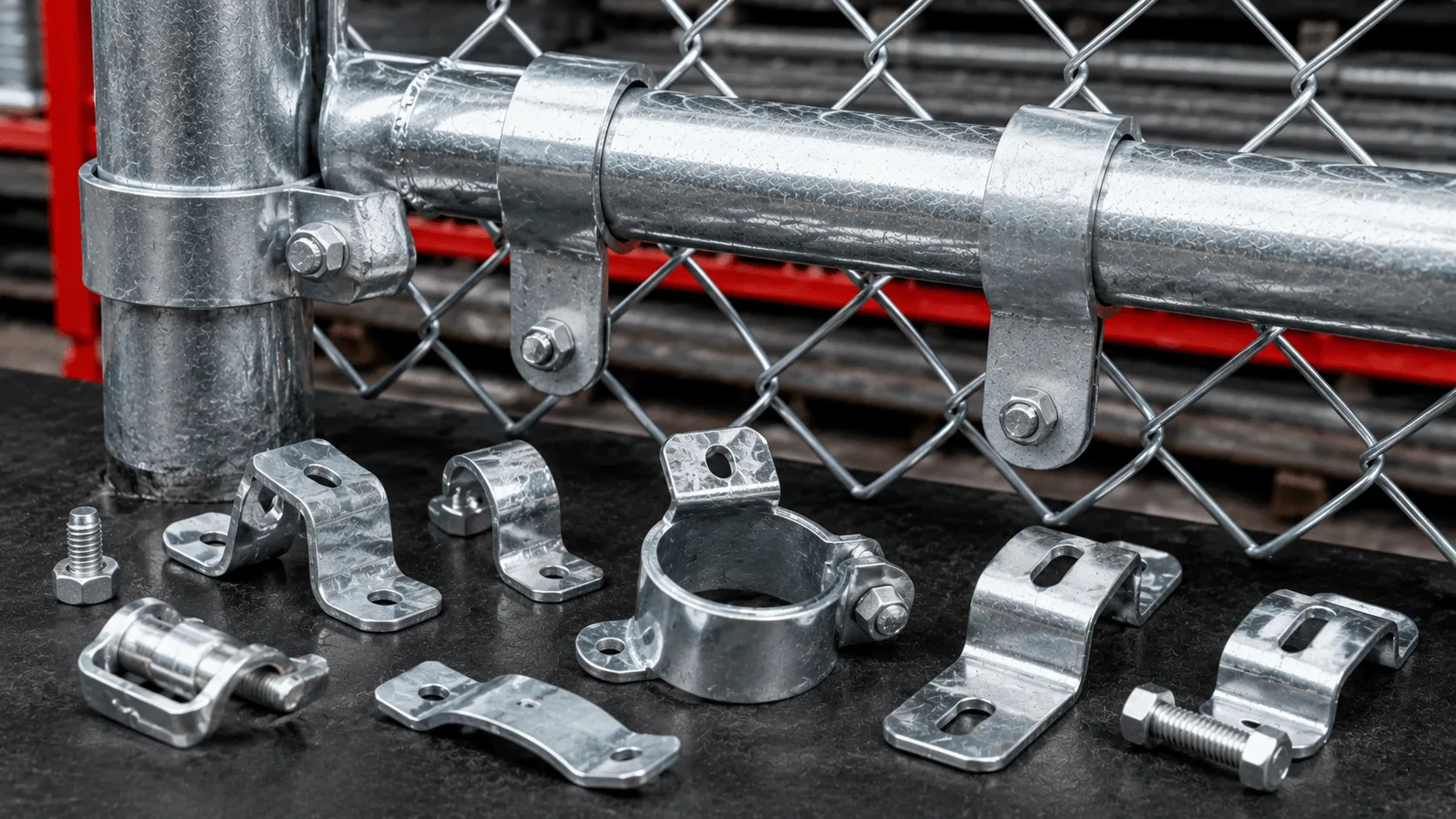
What Are Fence Strap Attachments and How Do They Work?
10 Sept 2026
Learn what fence strap attachments are, how they work and what to consider when choosing attachments for fencing pipe and framework.
 Fittings
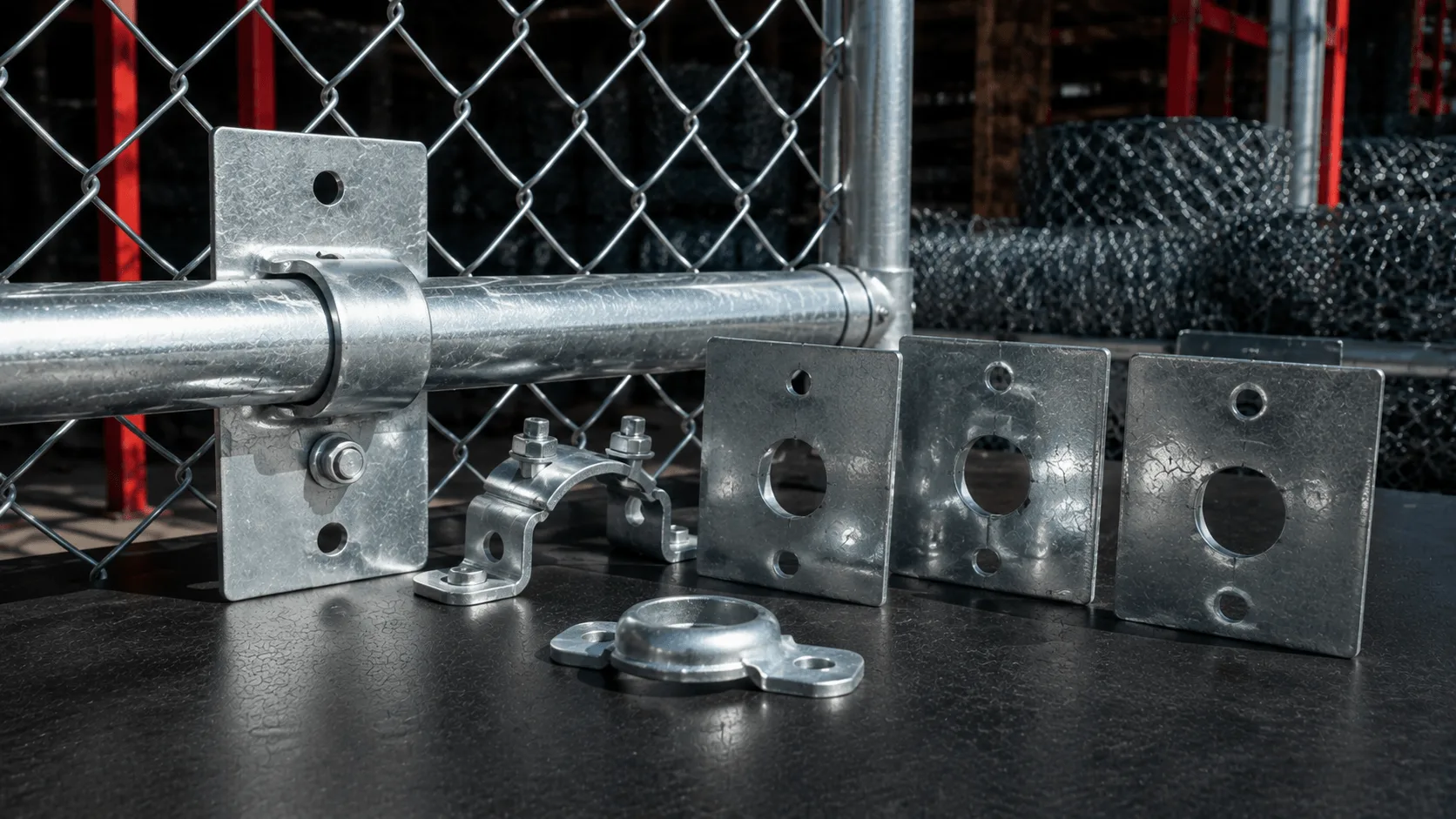
What Are Fence Back Plates and When Should You Use Them?
9 Sept 2026
Learn what fence back plates are, when to use them and how to choose the right size and finish for fencing pipe connections.
 Product Comparison
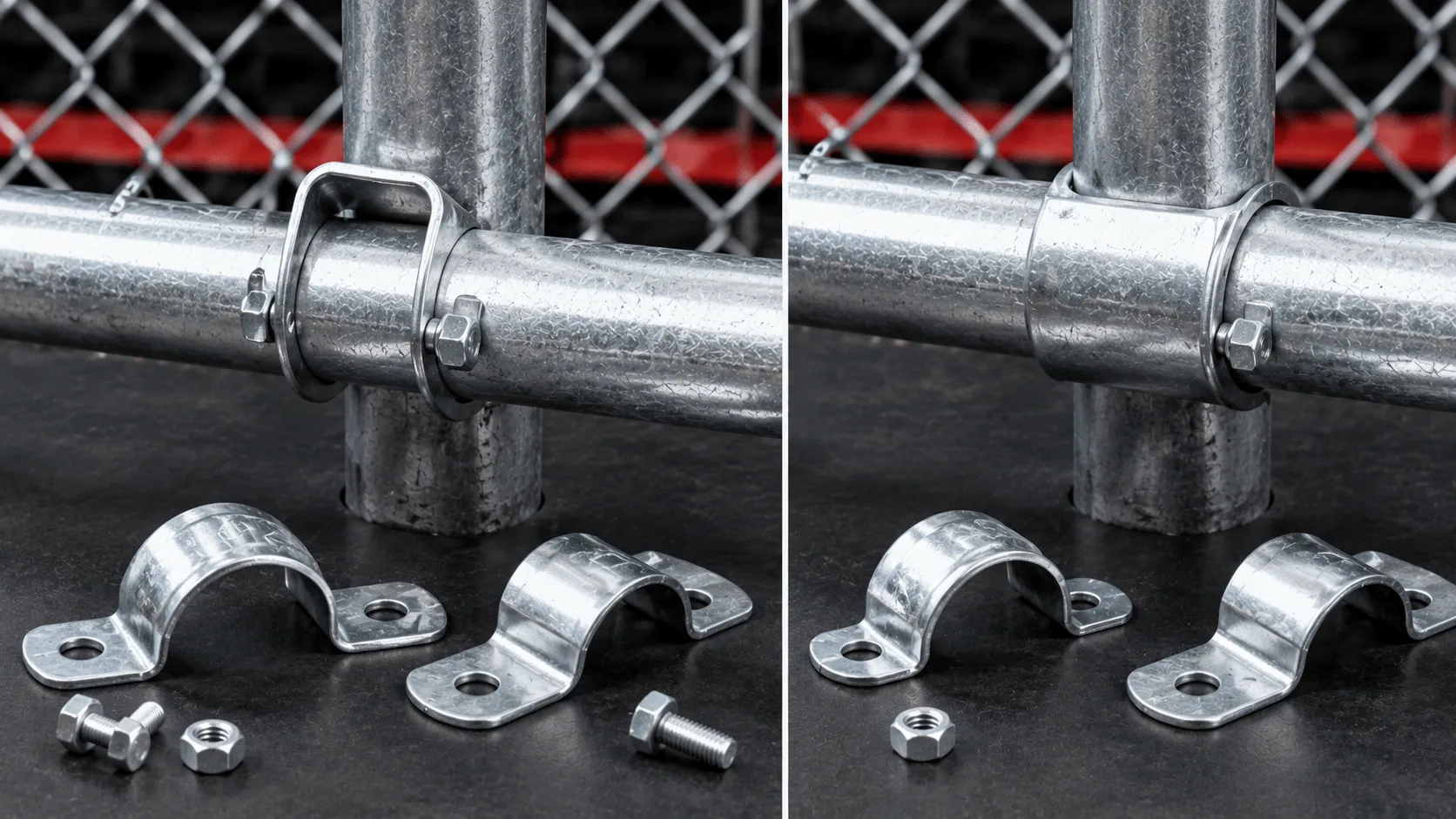
Loose Fit vs Tight Fit Pipe Straps: What's the Difference?
8 Sept 2026
Compare loose fit vs tight fit pipe straps, including sizing, finishes and key factors to check when choosing straps for fencing pipe.
Tell us about the fence.
One business day. That's how fast we come back with pricing once we have your quantity, finish and postcode.
Buying regularly? Apply for a credit account