
What Are Fence Back Plates and When Should You Use Them?
Learn what fence back plates are, when to use them and how to choose the right size and finish for fencing pipe connections.
Introduction
The biggest parts of a fence tend to get all the attention. Posts, pipe and mesh are easy to spot, while smaller fittings quietly handle the connections that help bring the framework together.
Fence back plates are one of those easy-to-overlook components.
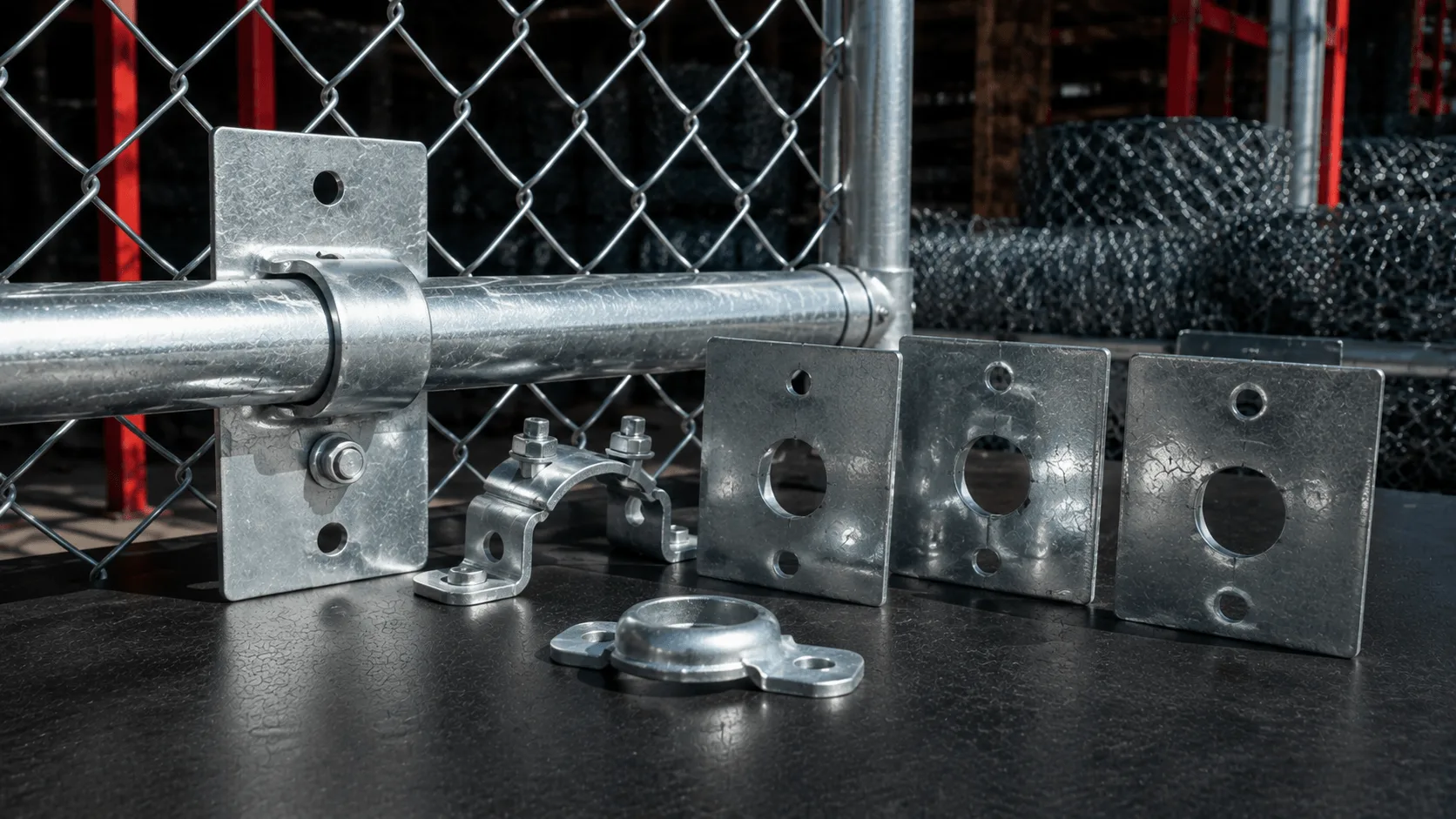
Back plates are fittings used as part of suitable fencing attachment and connection arrangements. Rather than being chosen on their own, they need to be considered alongside the pipe size, strap or attachment hardware, finish and overall fence design.
Supaguard Fencing includes back plates within its broader fencing fittings range, with options for common fencing pipe sizes. Understanding when they're required can help contractors prepare more complete material orders and avoid discovering one missing piece halfway through installation.
Small fitting, big lesson: every connection needs the right components.
TLDR - Quick Guide
Here's what you need to know about fence back plates:
- They're connection components: Back plates are used as part of suitable fencing attachment arrangements.
- Sizing matters: The back plate needs to correspond with the pipe and associated fitting configuration.
- They're available in multiple sizes: Supaguard lists back plates for 25NB, 32NB, 40NB and 50NB applications.
- Finish matters: Available finish options should be matched with the surrounding fencing system.
They're often considered with other fittings: Pipe straps and strap attachments should be checked when planning the complete connection.
Don't assume every connection needs one: Whether a back plate is required depends on the fencing configuration.
Plan them early: Count connection points before ordering rather than treating back plates as last-minute extras.
The important idea is simple: select the entire connection as a system rather than focusing on one piece of hardware at a time.
Detailed Breakdown
What Are Fence Back Plates?
Fence back plates are hardware components used within suitable fencing connections.
They're part of the wider Fencing Fittings category, which includes products such as:
- Pipe straps
- Strap attachments
- Rail clamps
- Post clamps
- Corner fittings
- Tee fittings
- Cross fittings
- Post caps
- Base plates
- Other framework hardware
A back plate shouldn't be thought of as an independent piece that can be added anywhere simply because the dimensions look close.
Its usefulness depends on the complete connection.
Before selecting one, establish what components are being connected, which pipe is involved and what the fence design requires.
How Do Fence Back Plates Work?
A back plate provides part of a fastening or attachment arrangement in suitable fencing configurations.
Think of it as one component within a connection rather than the complete connection itself. Depending on the fencing setup, other hardware works with the back plate to secure the intended components.
A sensible selection process looks like this:
- Identify the required connection.
- Check the fencing pipe size.
- Determine which attachment or strap components are required.
- Select the corresponding back plate.
- Confirm the finish.
- Check any additional fastening hardware.
- Verify the complete assembly before installation.
- This approach avoids a common mistake: ordering a back plate first and then trying to build a connection around it.
1. When Should You Use Fence Back Plates?
Use fence back plates when the specified fencing connection or attachment arrangement requires them.
That sounds obvious, but it's an important distinction. Not every fitting or pipe connection automatically needs a back plate.
Their use should be determined by:
- Fence design
- Connection type
- Pipe size
- Associated fittings
- Installation requirements
- Project specification
If you're replacing an existing connection, inspect how the original components work together rather than assuming the back plate alone is the part that needs replacing.
2. Match the Back Plate to the Pipe Size
Sizing is one of the first things to check.
Supaguard lists back plates corresponding with several common nominal bore sizes used within fencing frameworks, including:
- 25NB
- 32NB
- 40NB
- 50NB
This makes the Fencing Pipe specification an important part of your selection process.
Before ordering, confirm:
- Nominal bore
- Pipe specification
- Associated fitting size
- Required back plate
- Finish
- Quantity
Don't rely on visual similarity. A box of almost-right fittings is still a box of wrong fittings.
3. Understand Nominal Bore Sizing
Back plates and other fencing fittings may be identified according to the nominal bore of the corresponding pipe.
Nominal bore, usually shown as NB, is a pipe sizing designation. It shouldn't automatically be interpreted as the pipe's measured outside diameter.
That matters when you're trying to match fittings.
For example, if the project specifies a particular NB pipe size, use the corresponding fitting specification rather than simply measuring across the outside of the pipe and searching for a back plate with that number.
For accurate selection:
- Check the pipe's stated NB size.
- Review the fitting specification.
- Match components according to the manufacturer's sizing.
- Confirm compatibility if the existing pipe isn't clearly identified.
A tape measure is useful. The specification is better.
4. Consider Back Plates With Pipe Straps
Back plates can be relevant when planning pipe strap and attachment arrangements.
Rather than selecting fence back plates separately, consider all the components needed for the particular connection.
Your checklist might include:
- Pipe
- Pipe strap
- Strap attachment
- Back plate
- Required fasteners
- Finish
This is particularly important because fencing systems can include both loose fit and tight fit pipe straps.
The correct back plate doesn't automatically tell you which pipe strap configuration the project requires. Each part needs to be checked against the intended connection.
5. Check the Finish
Size gets most of the attention, but finish is another important ordering detail.
Fencing components may be supplied in different finishes to suit the surrounding framework. Your back plates should therefore be selected with the rest of the connection in mind.
Check the finish of:
- Fencing pipe
- Pipe straps
- Strap attachments
- Back plates
- Nearby fittings
- Other visible framework components
Matching finishes can help create a more consistent installation and ensure the supplied components align with the project specification.
There's little benefit in carefully matching every size only to discover that one part of the connection was ordered in the wrong finish.
6. Back Plates vs Base Plates
The names sound similar, but back plates and base plates aren't the same thing.
A back plate is used as part of an attachment or fastening arrangement. A base plate is a different fitting associated with supporting or mounting suitable fencing framework components.
Confusing the two can lead to incorrect ordering.
When preparing your fittings list, use the full product description rather than shortening everything to "plates."
It's a tiny naming detail that can prevent a surprisingly confusing phone call later.
7. Back Plates vs Strap Attachments
Back plates and strap attachments should also be treated as distinct components.
They may be associated with the same general connection arrangement, but one shouldn't automatically be assumed to replace the other.
When planning the connection, determine:
What pipe is involved?
What needs to attach to the pipe?
Which strap or fitting is required?
Is a strap attachment required?
Is a back plate required?
What other fastening hardware completes the assembly?
Working through those questions helps make sure the materials order contains the complete connection rather than three-quarters of one.
8. Plan Back Plates With the Whole Framework
Good material planning means looking beyond individual fittings.
Before ordering fence back plates, map the fence framework and identify the locations where the relevant connections will occur.
Review:
- Posts
- Rails
- Corners
- Gate areas
- Changes in framework
- Attachment points
- Pipe sizes
- Required fittings
Once you've identified the connection locations, calculate the number of back plates required from the actual fence design.
This is much more reliable than ordering a rough handful and hoping the quantity works out.
9. When Replacing Existing Back Plates
Replacement work deserves extra attention because existing fencing isn't always clearly documented.
Before replacing a back plate, identify:
- Existing pipe size
- Existing strap or attachment
- Back plate dimensions or specification
- Finish
- Condition of surrounding hardware
- Reason the component needs replacing
Don't assume the existing component was correctly specified simply because it has been there for years.
If the fencing system has been altered or repaired previously, confirming compatibility becomes even more important.
10. Check the Complete Connection Before Installation
Before installing the first back plate, lay out the components for one complete connection.
Confirm that:
- The pipe size is correct.
- The strap or attachment is correct.
- The back plate corresponds with the connection.
- Finishes are appropriate.
- Required fastening hardware is available.
- The assembly matches the fencing design.
Doing this once before repeating the connection across the project can catch ordering or compatibility problems early.
Discovering the problem at connection number one is inconvenient. Discovering it at connection number 47 is considerably less charming.
11. Don't Improvise When Specifications Are Unclear
Small fittings often look simple enough to improvise.
Resist the temptation.
If the back plate, pipe or associated attachment doesn't appear compatible, recheck the product specifications before modifying components or substituting something else.
Improvised connections can create problems with:
- Fit
- Alignment
- Installation consistency
- Appearance
- Maintenance
- Project compliance
If you're unsure which back plate or associated hardware suits the intended connection, Contact Supaguard Fencing with the relevant pipe and fencing details before ordering.
Common Mistakes When Choosing Fence Back Plates
Selecting the Wrong Size
Back plates should correspond with the intended pipe and connection arrangement. Always verify the nominal bore and associated fitting sizes.
Ordering the Back Plate Alone
Think about the complete connection. Check whether pipe straps, strap attachments or additional hardware are also required.
Confusing Back Plates With Base Plates
They're different fencing components with different roles. Make sure the materials list clearly identifies which type of plate is required.
Ignoring the Finish
Size isn't the only specification worth checking. Coordinate the back plate finish with the surrounding fittings and framework.
Guessing From Pipe Measurements
Nominal bore isn't necessarily the same as outside diameter. Use the manufacturer's stated pipe and fitting specifications when matching components.
Assuming Every Connection Needs a Back Plate
Back plates should be used where required by the intended connection. Don't add or omit them based purely on what another fence happened to use.
Key Takeaways
Fence back plates are connection components. They form part of suitable attachment arrangements within fencing frameworks.
Back plates aren't standalone solutions. Consider the pipe, strap, attachment and fastening hardware as one complete connection.
Sizing matters. Supaguard lists back plates corresponding with 25NB, 32NB, 40NB and 50NB applications.
Use nominal bore specifications. Don't assume the NB size equals the measured outside diameter of the pipe.
Check associated fittings. Pipe straps and strap attachments may need to be considered when specifying the complete connection.
Back plates and base plates are different. Similar names don't mean interchangeable jobs.
Finish matters too. Match the back plate with the surrounding framework and project requirements.
Calculate quantities from the fence design. Count the actual connection points rather than guessing how many back plates you'll need.
Verify one complete assembly first. Checking the connection before repeating it across the fence can catch mistakes early.
FAQs
What are fence back plates used for?
Fence back plates are used as part of suitable attachment and fastening arrangements within fencing frameworks. They work alongside the other components specified for the particular connection. Whether one is required depends on the fence design and connection type.
What sizes do fence back plates come in?
Supaguard lists back plates corresponding with 25NB, 32NB, 40NB and 50NB applications. The correct option should be selected according to the pipe and associated connection components. Always verify sizing before placing an order.
Are fence back plates the same as base plates?
No, back plates and base plates are different types of fencing fittings. A back plate forms part of suitable attachment arrangements, while a base plate performs a different role within the fencing framework. Check the full product description when preparing your fittings order.
Do fence back plates need to match the pipe size?
The back plate should be selected to suit the intended connection and corresponding pipe specification. Check the pipe's nominal bore together with the other fittings used in the assembly. Don't rely solely on an approximate outside measurement when choosing components.
How do I know which fence back plate I need?
Start by identifying the pipe size, connection type and other fittings required at that location. Then match the back plate and finish to the complete assembly rather than selecting it independently. If compatibility isn't clear, Contact Supaguard Fencing before ordering.
More from the blog.
 Fittings
What Are Fence Strap Attachments and How Do They Work?
10 Sept 2026
Learn what fence strap attachments are, how they work and what to consider when choosing attachments for fencing pipe and framework.
 Product Comparison
Loose Fit vs Tight Fit Pipe Straps: What's the Difference?
8 Sept 2026
Compare loose fit vs tight fit pipe straps, including sizing, finishes and key factors to check when choosing straps for fencing pipe.
 Fittings
What Are Multi-Purpose Fence Connectors and When Are They Used?
7 Sept 2026
Learn what multi-purpose fence connectors are, when they are used and what to check when selecting fittings for chain link fencing.
Tell us about the fence.
One business day. That's how fast we come back with pricing once we have your quantity, finish and postcode.
Buying regularly? Apply for a credit account