

Loose Fit vs Tight Fit Pipe Straps: What's the Difference?
Compare loose fit vs tight fit pipe straps, including sizing, finishes and key factors to check when choosing straps for fencing pipe.
Introduction
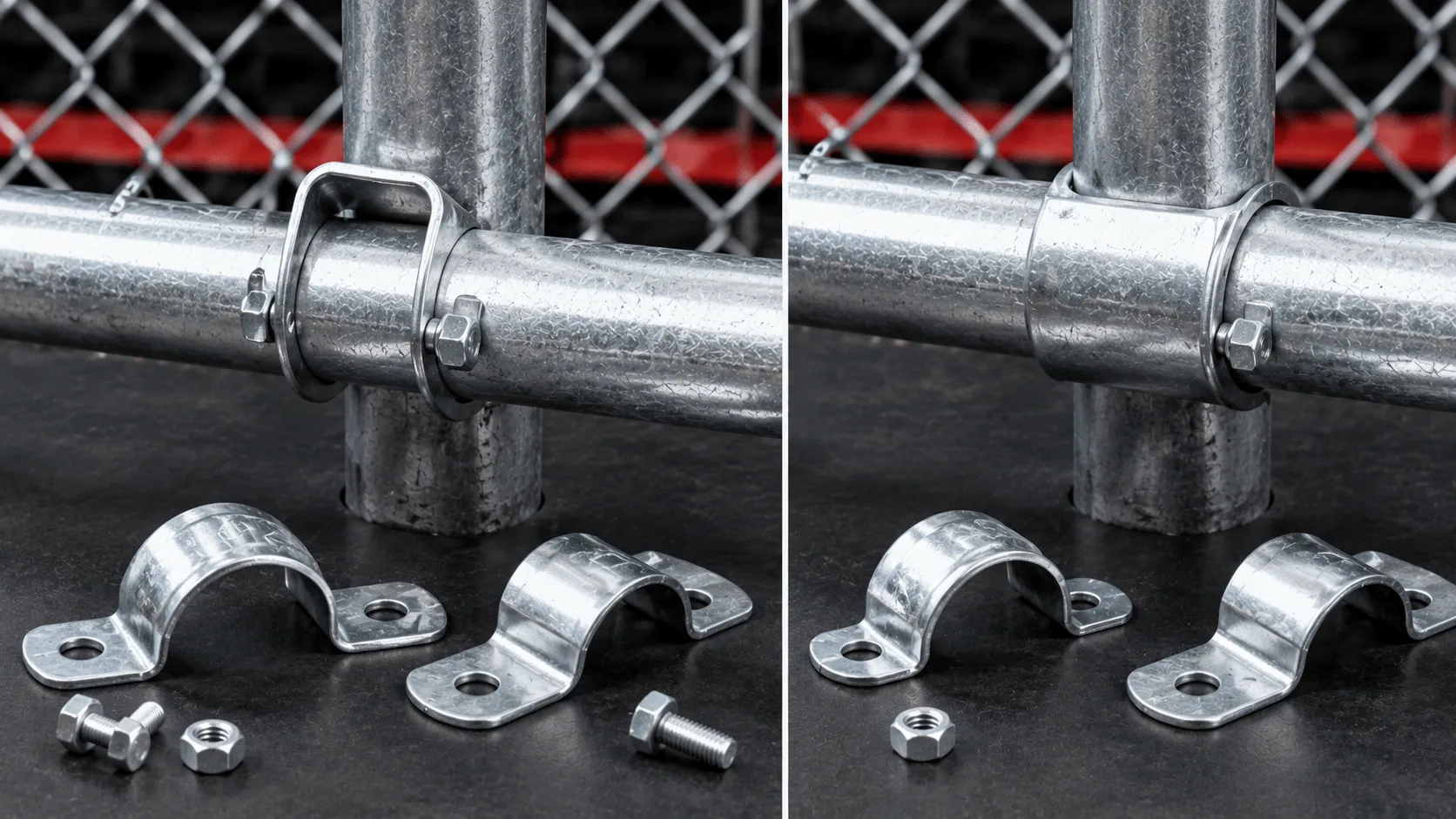
Pipe straps may be small components, but choosing the wrong type can turn a straightforward fencing job into an avoidable headache. One distinction worth understanding is loose fit vs tight fit pipe straps.
Both are designed for use with fencing pipe, but the names indicate an important difference in how closely the strap is intended to fit around the corresponding pipe. The right option depends on what the connection needs to achieve, the pipe size and the overall fencing design.
Supaguard Fencing offers both loose fit and tight fit pipe straps within its fencing fittings range. Both types are available for 25NB, 32NB, 40NB and 50NB pipe, with galvanised and black finish options.
So, loose fit vs tight fit pipe straps: which should you choose? The answer starts with understanding what the connection actually requires.
TLDR - Quick Guide
Here’s the quick comparison between loose fit vs tight fit pipe straps:
- Loose fit pipe straps: Intended to provide a looser fit around the corresponding pipe than the tight fit version.
- Tight fit pipe straps: Intended to sit more closely around the corresponding pipe.
- Same listed size range: Supaguard offers both types for 25NB, 32NB, 40NB and 50NB.
- Finish options: Both ranges are available in GAL / PC BLACK.
- Application decides the winner: One isn't automatically better than the other.
- Pipe size matters: Always match the strap to the correct nominal bore size.
- Check associated components: Strap attachments and back plates are also available in corresponding sizes.
- Don't guess: If the required fit isn't clear from the fence design, confirm it before ordering.
The best strap isn't the tightest or loosest one. It's the one designed for the connection you're building.
Detailed Breakdown
What Are Pipe Straps in Fencing?
Pipe straps are fittings used with compatible fencing pipe as part of suitable framework and attachment arrangements.
They belong to a broader family of Fencing Fittings that includes components such as:
- Gate hinges
- Adjustable corners
- Corner fittings
- Tee fittings
- Cross fittings
- Rail clamps
- Post clamps
- Strap attachments
- Back plates
- Post caps
- Pipe straps provide another way of working with pipe within the fence framework.
The key detail is that not all pipe straps are specified the same way. Supaguard separates them into Pipe Straps – Loose Fit and Pipe Straps – Tight Fit, making the fit type a deliberate product-selection decision.
What Is a Loose Fit Pipe Strap?
A loose fit pipe strap is the looser-fitting option within the two pipe strap categories.
The important word is loose. It indicates that the strap isn't intended to fit around its corresponding pipe in exactly the same close-fitting manner as the tight fit version.
That distinction can be useful where the fencing arrangement calls specifically for the loose fit version.
Supaguard offers loose fit pipe straps for:
- 25NB
- 32NB
- 40NB
- 50NB
- They're available in GAL / PC BLACK finishes.
The manufacturer's online listing doesn't specify a precise clearance measurement between the loose fit strap and pipe, so avoid assuming a particular gap without confirming the product specifications.
What Is a Tight Fit Pipe Strap?
A tight fit pipe strap is the closer-fitting alternative.
Again, the terminology gives us the fundamental distinction: the tight fit option is intended to fit its corresponding pipe more closely than the loose fit version.
Supaguard offers tight fit pipe straps in the same listed sizes:
- 25NB
- 32NB
- 40NB
- 50NB
- GAL / PC BLACK finish options are also available.
This means choosing between loose fit vs tight fit pipe straps isn't simply a question of available pipe size. You need to establish which fit is appropriate for the particular connection.
1. The Main Difference Is the Fit
The most obvious distinction is right there in the product names.
A loose fit strap provides a looser relationship around the pipe, while a tight fit strap provides a closer fit.
Why does that matter?
Because different fencing connections can require components to interact with pipe differently. A connection intended to closely locate a component around a pipe isn't necessarily the same as one designed with additional clearance.
Rather than deciding that tighter must automatically mean better, ask:
What is the strap connecting?
What does the fence design require?
Does the connection call for loose or tight fit?
What pipe size is being used?
What associated fittings are required?
"Tighter is stronger" might sound convincing, but it isn't a substitute for the correct specification.
2. Both Types Need the Correct Pipe Size
Whether you're using loose or tight fit, the strap still needs to correspond with the Fencing Pipe in the project.
Supaguard's loose and tight fit pipe strap ranges both cover 25NB, 32NB, 40NB and 50NB options.
That gives installers several common fencing-pipe sizes to work with.
When ordering, verify:
- The nominal bore of the pipe.
- The required strap type.
- The strap size.
- The required finish.
- Associated attachment hardware.
- The quantity required.
Don't select a 40NB strap because a quick tape measurement seems close. Use the specified nominal bore and product information.
3. Loose Fit Doesn't Mean Incorrectly Sized
The word "loose" can cause confusion.
A loose fit pipe strap shouldn't be interpreted as a poorly sized tight fit strap. It's a separately identified product category.
In other words, if a connection requires a loose fit 40NB pipe strap, the solution isn't to find an oversized tight fit strap and hope for the best.
Use the fitting designed for the intended arrangement.
That helps maintain consistency across the project and makes future replacement or maintenance easier because the components have been specified deliberately.
4. Tight Fit Doesn't Automatically Mean Better
It's easy to assume that tighter equals more secure and therefore must be the superior option.
That's too simplistic.
The correct fitting depends on what the connection is designed to do. If the arrangement calls for a loose fit strap, choosing a tight fit version simply because it sounds more secure may produce the wrong configuration.
When comparing loose fit vs tight fit pipe straps, think in terms of suitability, not superiority.
Ask what the design requires, then choose accordingly.
5. Consider Strap Attachments and Back Plates
Pipe straps don't necessarily exist in isolation.
Supaguard also lists Strap Attachments and Back Plates in 25NB, 32NB, 40NB and 50NB options, with GAL / PC BLACK finishes.
That matching size range is worth considering when preparing the complete fittings order.
Your checklist may include:
- Pipe strap type
- Pipe strap size
- Strap attachment
- Back plate
- Required fasteners
- Pipe specification
- Finish
Looking at the complete connection before ordering is far more reliable than buying the strap first and figuring out everything else on site.
6. Finish Is Another Selection Factor
Both loose fit and tight fit pipe straps are available in GAL / PC BLACK options from Supaguard.
That means your loose fit vs tight fit pipe straps decision has two dimensions:
- Fit + Finish
- The appropriate finish should be considered alongside the surrounding framework.
- Check:
- Pipe finish
- Nearby fittings
- Other visible hardware
- Fence specification
- Project appearance requirements
A correctly sized strap in an unsuitable finish can still be the wrong item for the job.
7. Check the Complete Connection
A pipe strap is only one part of a connection.
Before ordering, look at everything that needs to come together at that location.
Consider:
What pipe is being used?
What is being attached to it?
Is loose or tight fit specified?
Is a strap attachment needed?
Is a back plate required?
What finish is needed?
How many identical connections exist?
This approach is particularly useful on larger fencing projects where the same connection may be repeated dozens or hundreds of times.
One small specification error repeated 100 times stops being small pretty quickly.
8. Plan Pipe Straps With the Framework
Pipe straps should be included when planning the overall fence framework.
Map the fence and identify where each connection occurs before placing the materials order.
Pay attention to:
- Straight fence runs
- Corners
- Gates
- Posts
- Rails
- Framework transitions
- Strap locations
- Other attachment points
- Then identify which components each location requires.
This also makes quantity calculations easier because you can count actual connections rather than guessing how many straps "should probably be enough."
9. Don't Confuse Nominal Bore With Outside Diameter
Pipe straps in Supaguard's range are identified by nominal bore sizes such as 25NB, 32NB, 40NB and 50NB.
Nominal bore is a pipe sizing designation. It shouldn't automatically be treated as the measured outside diameter of the pipe.
When matching straps to pipe:
- Use the specified NB size.
- Check the manufacturer's pipe information.
- Match the fitting to the designated pipe size.
- Don't rely solely on an approximate physical measurement.
This becomes especially important when different pipe sizes are being used across the same fencing project.
10. When Should You Confirm With the Supplier?
Sometimes the fence design clearly identifies the required pipe strap. Other times, the connection may not make the required fit obvious.
That's when it's worth asking before ordering.
Seek clarification if:
- You're unsure whether loose or tight fit is required.
- The pipe specification isn't clear.
- You're replacing an existing fitting.
- You're unsure which attachment components are needed.
- The connection is unusual.
- You're considering substituting one strap type for another.
If the specification doesn't give you a confident answer, Contact Supaguard Fencing with the relevant pipe and connection details.
Five minutes spent checking can be considerably cheaper than a box full of fittings you can't use.
Common Mistakes When Choosing Pipe Straps
Assuming Tight Fit Is Always Better
It isn't. Tight and loose fit straps are separate options, and the correct choice depends on the connection requirements.
Treating Loose Fit as an Oversized Strap
Loose fit is a specified strap type. Don't create a makeshift loose fit by choosing an incorrectly sized strap.
Ordering by Pipe Diameter Alone
Use the nominal bore and manufacturer specifications when selecting pipe straps rather than relying only on an approximate measurement.
Forgetting Associated Components
Check whether the connection also requires a strap attachment, back plate or other hardware.
Ignoring Finish
GAL and PC BLACK options are available. Include finish in the specification when ordering.
Guessing the Difference in Clearance
The product range identifies loose and tight fit options but doesn't state a specific clearance difference online. Don't invent a measurement—confirm it if exact clearance is important to the project.
Key Takeaways
The main difference is fit. Loose fit straps are intended to provide a looser fit around corresponding pipe than tight fit straps.
Neither option is automatically better. The correct answer to loose fit vs tight fit pipe straps depends on the connection and fencing design.
Both types cover the same listed sizes. Supaguard offers loose and tight fit straps for 25NB, 32NB, 40NB and 50NB pipe.
Loose fit isn't incorrectly sized. It's a separate product type and should be selected deliberately.
Tight fit doesn't automatically mean stronger or more suitable. Use the fit required for the particular connection.
Check associated hardware. Strap attachments and back plates are also available across corresponding pipe sizes.
Match the finish. Consider GAL or PC BLACK in relation to the surrounding fencing framework.
Use nominal bore when matching components. Don't confuse NB sizing with the pipe's outside diameter.
Don't guess technical clearances. If the exact difference between loose and tight fit matters, confirm the product specifications before ordering.
FAQs
What is the difference between loose fit and tight fit pipe straps?
The fundamental difference is how closely the strap is intended to fit around its corresponding fencing pipe. A loose fit strap provides a looser fit, while a tight fit strap is intended to sit more closely around the pipe. The correct choice depends on the connection and fencing specification.
Is a tight fit pipe strap always better?
No, tighter doesn't automatically mean better for every fencing connection. Loose and tight fit pipe straps are separate product options intended for different connection requirements. Choose the type specified or appropriate for the framework you're building.
What sizes are loose and tight fit pipe straps available in?
Supaguard offers both loose fit and tight fit pipe straps for 25NB, 32NB, 40NB and 50NB pipe. This means the pipe size alone doesn't determine whether you need loose or tight fit. You also need to identify the required connection type and finish.
Can I use a larger tight fit strap instead of a loose fit strap?
You shouldn't create a loose fit by simply selecting an incorrectly sized tight fit strap. Loose fit pipe straps are a separately identified product type and should be specified accordingly. If you're considering substituting strap types or sizes, confirm compatibility before installation.
What should I check before ordering pipe straps?
Confirm whether you require loose or tight fit, then check the pipe's nominal bore, required finish and associated connection hardware. Consider whether strap attachments, back plates or other components are also needed. Preparing the entire connection specification first can help prevent incorrect or incomplete orders.
More from the blog.
 Fittings
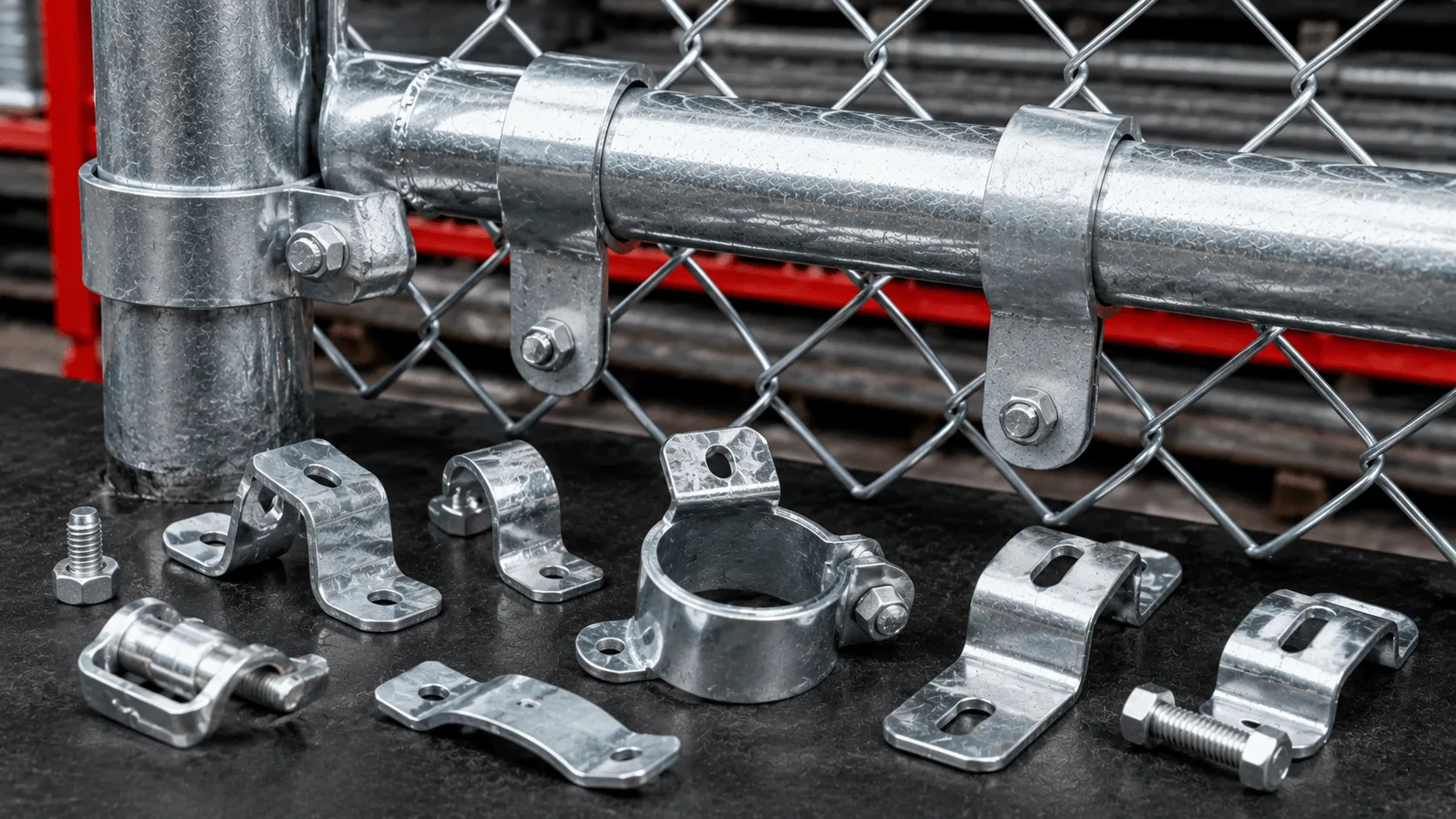
What Are Fence Strap Attachments and How Do They Work?
10 Sept 2026
Learn what fence strap attachments are, how they work and what to consider when choosing attachments for fencing pipe and framework.
 Fittings
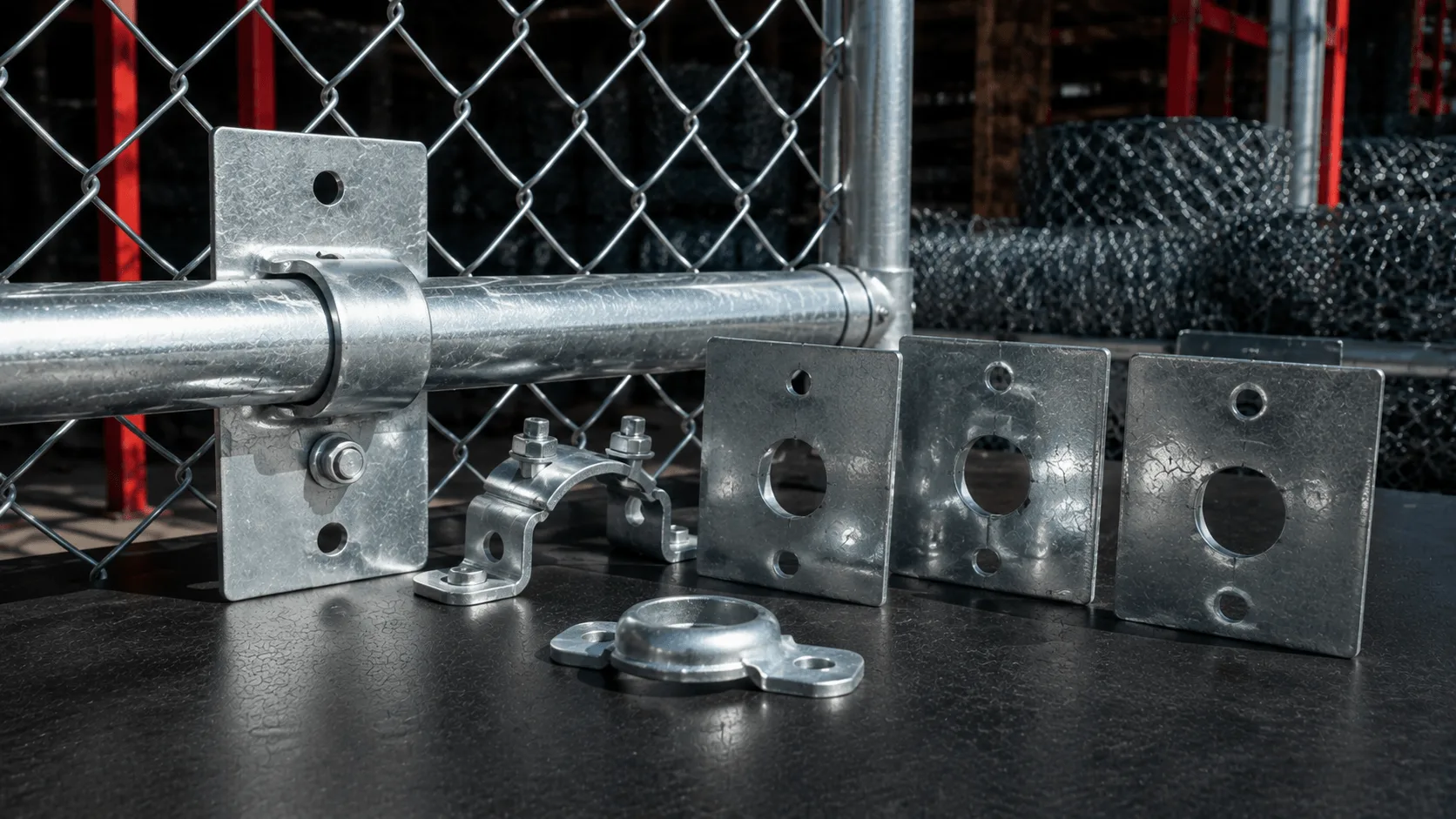
What Are Fence Back Plates and When Should You Use Them?
9 Sept 2026
Learn what fence back plates are, when to use them and how to choose the right size and finish for fencing pipe connections.
 Fittings
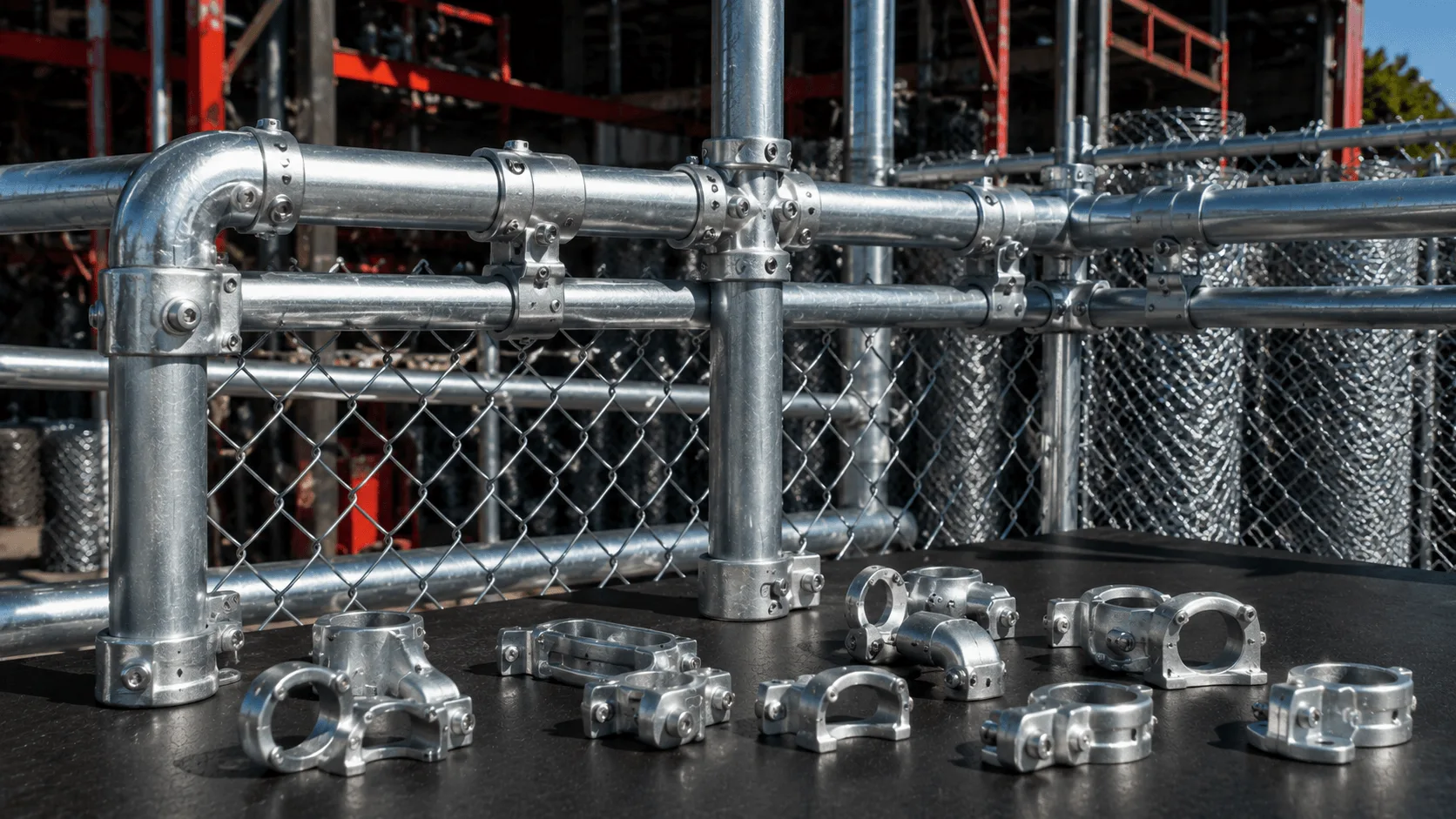
What Are Multi-Purpose Fence Connectors and When Are They Used?
7 Sept 2026
Learn what multi-purpose fence connectors are, when they are used and what to check when selecting fittings for chain link fencing.
Tell us about the fence.
One business day. That's how fast we come back with pricing once we have your quantity, finish and postcode.
Buying regularly? Apply for a credit account