

Flange Plates vs Base Plates: Understanding the Difference
Learn the differences between flange plates and base plates and how they support strong, reliable fencing systems.
Introduction
When planning a chainwire fencing project, most attention is usually given to fence mesh, gates, and posts. However, the components that anchor and support those structures are equally important. Among the most critical foundation elements are flange plates and base plates, which play a major role in ensuring fence stability, strength, and long-term durability.
Although the terms are sometimes used interchangeably, flange plates and base plates can serve different functions depending on the fencing system, site conditions, and installation requirements. Understanding these differences helps ensure that the right components are selected for each project.
At Supaguard Fencing, we understand that every component contributes to the overall performance of a fencing system. Choosing the correct plate configuration can significantly impact structural integrity, safety, and installation efficiency.
TLDR Guide
Understanding flange plates and base plates is important when designing secure and durable fencing systems. These components provide critical support between fence posts and the surfaces or foundations they are attached to.
Key points include:
- Base plates anchor posts directly to concrete or structural surfaces.
- Flange plates create strong connection points between structural components.
- Both contribute to fence stability and load distribution.
- Proper plate selection improves durability and longevity.
- Different projects require different plate configurations.
- High-quality fittings help maximise fence performance.
Selecting the right plate system helps ensure fencing remains secure, aligned, and structurally sound for years to come.
Detailed Breakdown
Why Fence Foundations Matter
Every fence relies on a strong foundation. While chainwire mesh and posts provide visibility and perimeter control, the supporting structure beneath them determines how well the fence performs over time.
Without adequate support, fencing systems may experience:
- Post movement
- Misalignment
- Structural instability
- Increased maintenance
- Premature failure
This is where flange plates and base plates become essential. They help transfer loads safely into supporting structures while maintaining the integrity of the fence system.
What Are Base Plates?
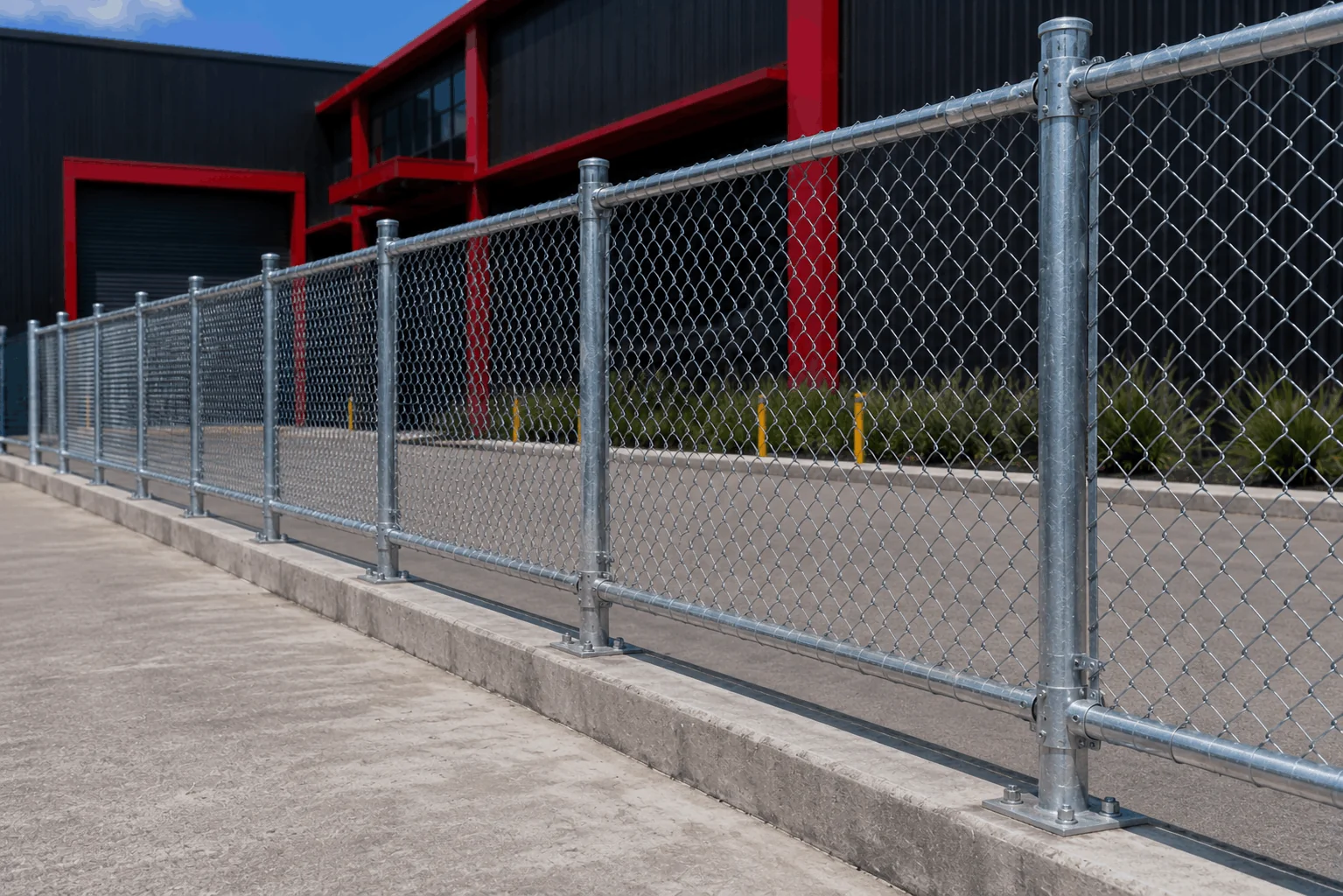
Base plates are flat steel plates attached to the bottom of fence posts. Their primary purpose is to secure posts to an existing surface, typically concrete slabs, footings, retaining walls, or structural foundations.
Instead of embedding posts directly into the ground, base plates allow posts to be mechanically fixed using anchor bolts.
Base plates are commonly used for:
- Commercial fencing
- Industrial fencing
- Warehouse perimeters
- Infrastructure projects
- Security fencing systems
They provide a practical solution when excavation is difficult or when fencing must be installed on existing hard surfaces.
Benefits of Base Plates
Base plates offer several advantages that make them popular across many fencing applications.
Key benefits include:
- Faster installation
- Reduced excavation requirements
- Easy integration with concrete surfaces
- Strong anchoring performance
- Simplified maintenance and replacement
Because the post is fixed directly to a prepared surface, installation can often be completed more efficiently than traditional in-ground post systems.
What Are Flange Plates?
Flange plates are connection plates designed to join structural components together. In fencing applications, they are commonly used to create secure connections between posts, pipes, rails, and framework elements.
Unlike base plates, which primarily anchor posts to foundations, flange plates are typically used within the fence structure itself.
Applications include:
- Structural framework connections
- Gate support systems
- Rail junctions
- Custom fencing configurations
- Security fence installations
Flange plates help maintain alignment while creating strong load-bearing connections throughout the fencing system.
Benefits of Flange Plates
Flange plates play an important role in maintaining structural continuity across a fencing installation.
Advantages include:
- Strong component connections
- Improved structural rigidity
- Better load distribution
- Enhanced framework stability
- Greater design flexibility
These benefits are particularly valuable in larger commercial and industrial projects where multiple structural elements must work together as a unified system.
The Main Difference Between Flange Plates and Base Plates
Although both components contribute to fence stability, their primary functions are different.
Base plates focus on anchoring fence posts to a surface or foundation.
Flange plates focus on connecting structural components together within the fence framework.
A simple way to understand the distinction is:
- Base plates connect posts to foundations.
- Flange plates connect structural components to each other.
Both are important, but they solve different engineering challenges within the overall fencing system.
When Should Base Plates Be Used?
Base plates are often the preferred solution when posts need to be installed on existing hard surfaces.
Common situations include:
- Concrete slabs
- Warehouse surrounds
- Loading docks
- Car parks
- Retaining walls
- Elevated structures
In these environments, traditional post excavation may not be practical or desirable. Base plates provide a secure and efficient alternative.
When Should Flange Plates Be Used?
Flange plates are typically selected when additional structural connections are required.
Examples include:
- Custom framework assemblies
- Security fence upgrades
- Reinforced gate structures
- Large-span fence sections
- Complex industrial installations
They help ensure that connected components remain stable while supporting loads throughout the structure.
How Flange Plates and Base Plates Work with Fence Fittings
No fencing system relies on a single component. Strong installations require multiple elements working together to create a secure and reliable framework.
Quality fittings help integrate flange plates, base plates, rails, posts, and other structural components into a cohesive system.
When all connection points are properly specified and installed, the result is a fence that delivers:
- Improved stability
- Enhanced durability
- Better structural performance
- Reduced maintenance requirements
- Longer service life
This is why professional fencing projects place significant emphasis on selecting the correct supporting hardware.
The Role of Pipe Components in Fence Frameworks
Fence posts and rails are commonly manufactured using steel pipe sections that provide strength and durability throughout the system.
When combined with flange plates and base plates, properly selected pipe components create a robust framework capable of supporting chainwire mesh, gates, and security features.
Strong framework design helps ensure:
- Consistent fence alignment
- Improved load resistance
- Greater structural reliability
- Better long-term performance
The relationship between plates, fittings, and pipe components is critical to achieving a high-quality installation.
Choosing the Right Components for Your Project
Every fencing project has unique requirements. Factors such as site conditions, security objectives, fence height, and foundation design all influence the selection of flange plates and base plates.
Choosing the correct components from the beginning helps avoid future issues and ensures the fencing system performs as intended.
For projects involving commercial, industrial, infrastructure, or security fencing, consulting experienced suppliers can help identify the most suitable solution for the application.
For assistance selecting fencing components, visit our Contact Page and speak with the team at Supaguard Fencing.
Key Takeaways
Understanding the difference between flange plates and base plates helps ensure fencing systems are designed with the correct structural support from the outset. While both components contribute to stability and durability, they serve different purposes within the fence framework.
Base plates primarily anchor posts to foundations, while flange plates connect structural components together. When used correctly, both help create stronger, safer, and more reliable fencing systems.
Key points to remember include:
- Base plates secure fence posts to concrete and structural surfaces.
- Flange plates connect framework components together.
- Both improve fence strength and stability.
- Proper plate selection supports long-term durability.
- Quality fittings contribute to overall structural performance.
- Strong framework design reduces maintenance requirements.
- Correct installation improves fence lifespan and reliability.
Investing in the right supporting components is one of the most effective ways to maximise the performance of any fencing project.
FAQs
What is the main purpose of a base plate?
A base plate is designed to anchor a fence post to a concrete slab, footing, or structural surface. It provides a secure connection without requiring the post to be embedded into the ground. This installation method is commonly used in commercial and industrial fencing projects.
What is the primary function of a flange plate?
A flange plate is used to connect structural components together within a fencing system. It helps create strong junctions between posts, rails, and framework elements. This improves overall structural stability and load distribution.
Are flange plates and base plates interchangeable?
No, flange plates and base plates perform different functions. Base plates anchor posts to foundations, while flange plates create structural connections between components. Selecting the correct plate type is important for achieving the desired performance.
When should base plates be used instead of in-ground posts?
Base plates are often preferred when fencing is installed on existing concrete surfaces or areas where excavation is impractical. They provide a strong anchoring solution while simplifying installation. This makes them ideal for warehouses, car parks, and infrastructure projects.
Do flange plates and base plates affect fence durability?
Yes, both components contribute significantly to fence durability and structural integrity. Properly specified and installed plates help distribute loads effectively and reduce movement within the system. This can improve lifespan while lowering maintenance requirements over time.
More from the blog.
 Fittings
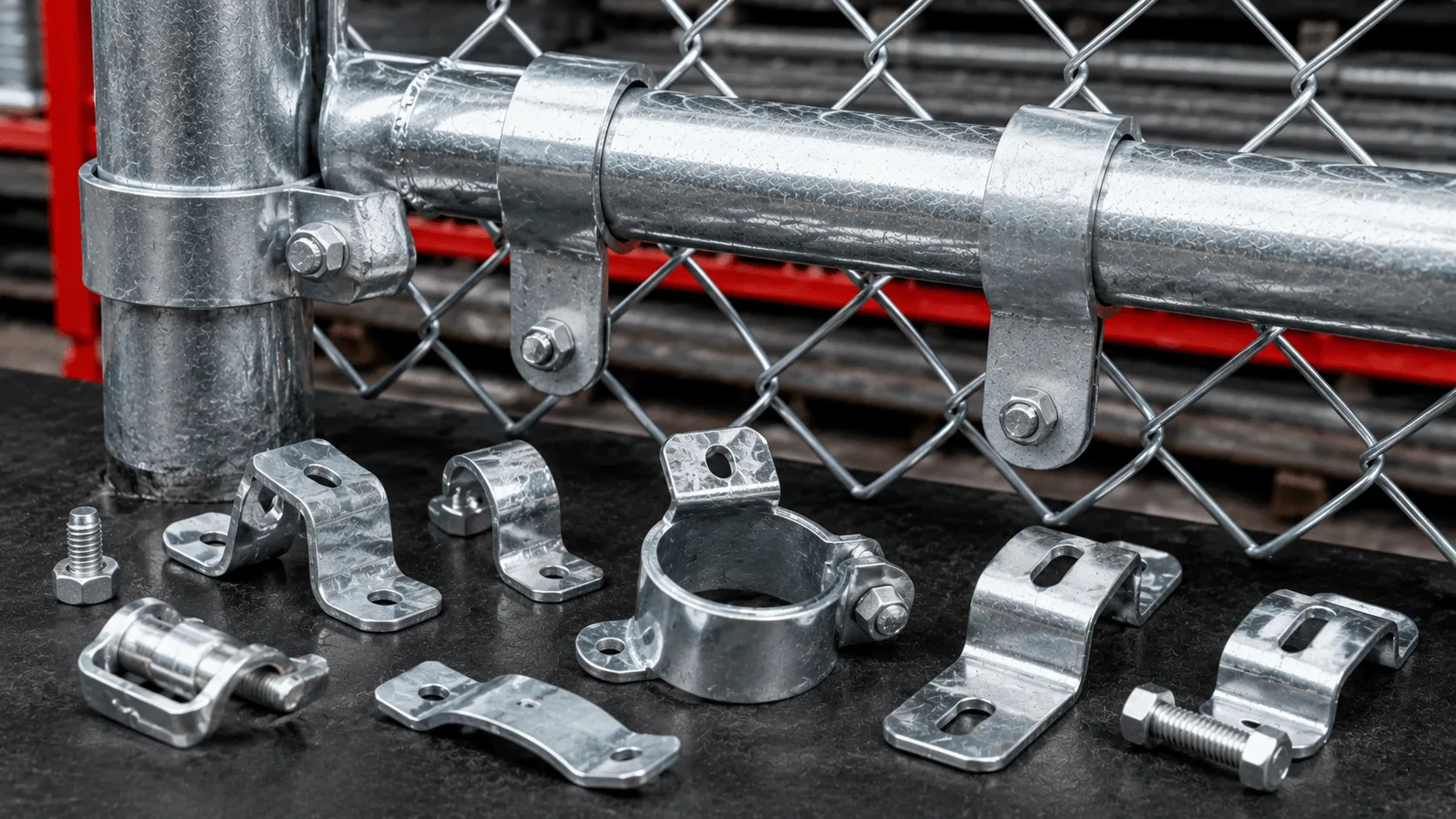
What Are Fence Strap Attachments and How Do They Work?
10 Sept 2026
Learn what fence strap attachments are, how they work and what to consider when choosing attachments for fencing pipe and framework.
 Fittings
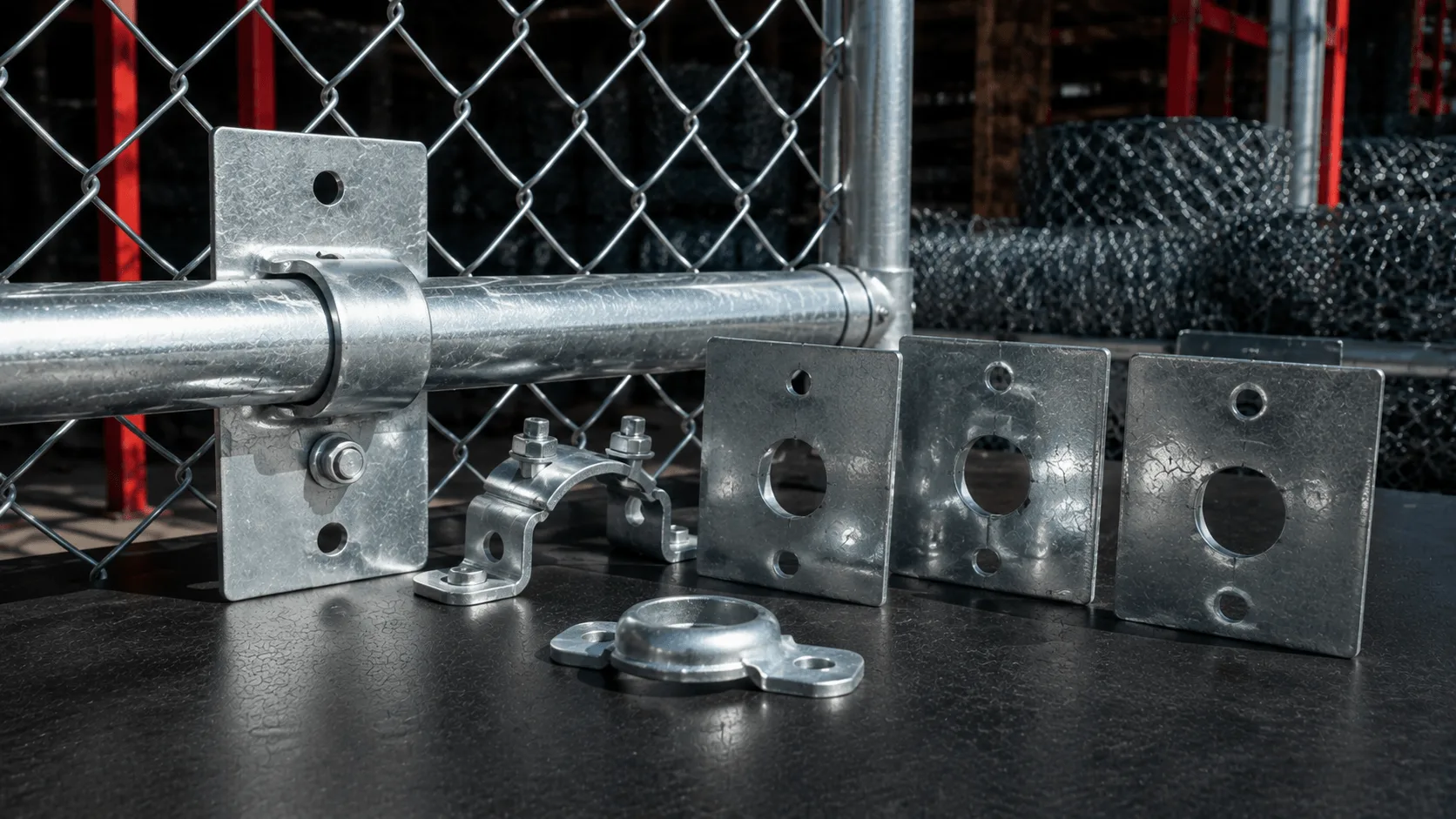
What Are Fence Back Plates and When Should You Use Them?
9 Sept 2026
Learn what fence back plates are, when to use them and how to choose the right size and finish for fencing pipe connections.
 Product Comparison
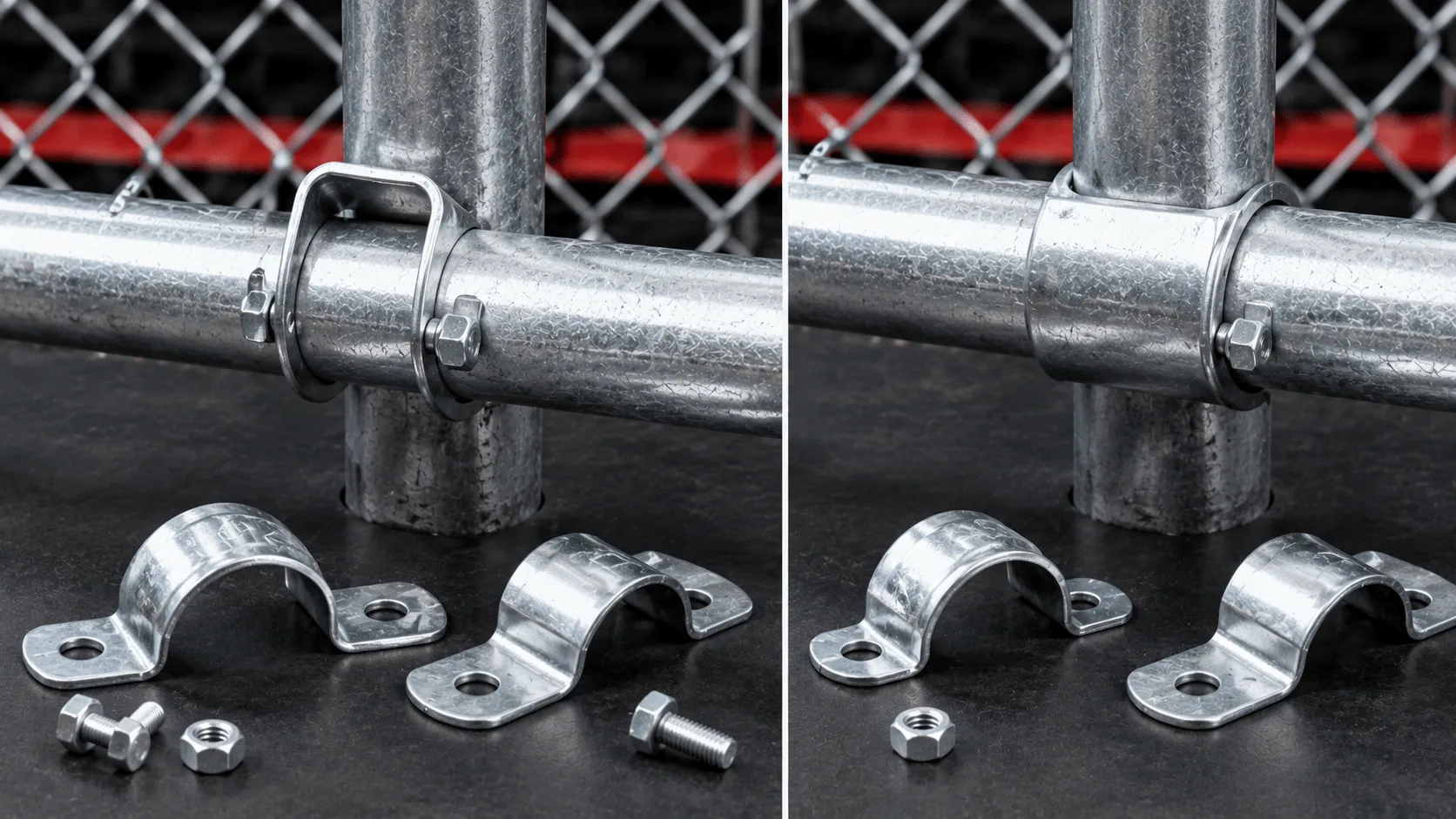
Loose Fit vs Tight Fit Pipe Straps: What's the Difference?
8 Sept 2026
Compare loose fit vs tight fit pipe straps, including sizing, finishes and key factors to check when choosing straps for fencing pipe.
Tell us about the fence.
One business day. That's how fast we come back with pricing once we have your quantity, finish and postcode.
Buying regularly? Apply for a credit account