
High Tensile vs Standard Barbed Wire: Key Differences
Compare high tensile barbed wire and standard barbed wire to choose the right solution for security, durability, and perimeter protection.
Introduction
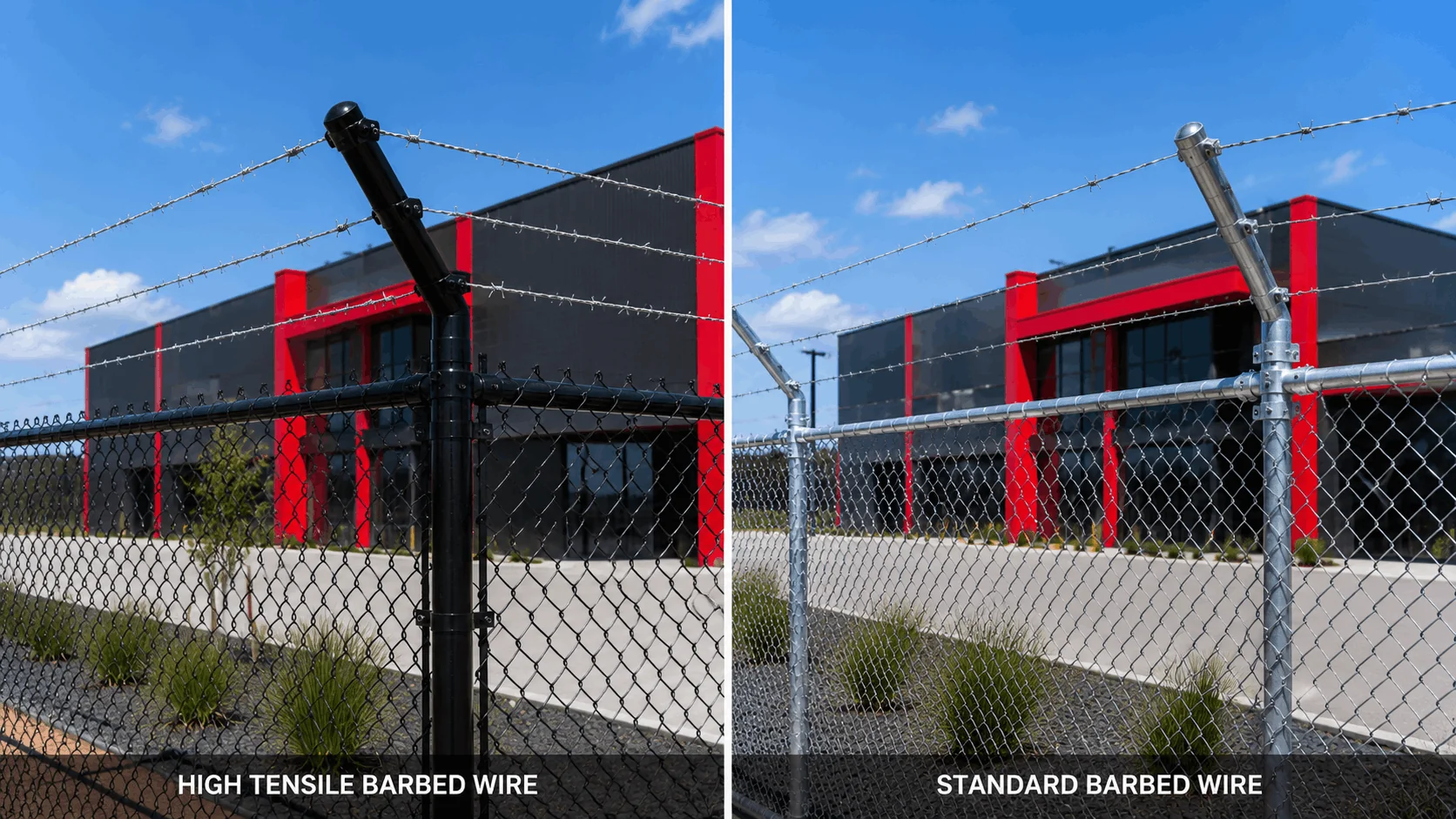
When planning a security fencing system, selecting the right perimeter protection components can have a significant impact on long-term performance, durability, and security effectiveness. One of the most common comparisons property owners, contractors, and facility managers make is high tensile barbed wire versus standard barbed wire.
While both products serve the same primary purpose of deterring unauthorised access and strengthening perimeter security, there are important differences in strength, durability, installation requirements, and long-term value. Understanding these differences can help ensure the most suitable solution is selected for commercial, industrial, infrastructure, and high-security applications.
At Supaguard Fencing, we provide fencing products designed for demanding Australian environments. Knowing when to use high tensile barbed wire and when standard barbed wire may be appropriate can help property owners maximise the effectiveness of their perimeter security systems.
TLDR Guide
High tensile barbed wire is designed to provide greater strength, durability, and long-term performance compared to standard barbed wire.
While standard barbed wire remains suitable for many general fencing applications, high tensile barbed wire offers superior resistance to stretching, sagging, and environmental stress. It is commonly used in security-focused environments where perimeter protection is a priority.
Key differences include:
- High tensile barbed wire offers greater strength.
- Standard barbed wire is often easier to install.
- High tensile wire provides better long-term durability.
- Both options improve perimeter security.
- Security fencing systems often combine barbed wire with chain link mesh and gates.
- Site requirements should determine the most suitable option.
Choosing the right product depends on security objectives, environmental conditions, and long-term performance expectations.
Detailed Breakdown
What Is Barbed Wire?
Barbed wire is a security fencing component that consists of wire strands fitted with sharp barbs positioned at regular intervals.
Its primary purpose is to:
- Deter unauthorised access
- Increase climb resistance
- Strengthen perimeter security
- Protect restricted areas
- Enhance fencing effectiveness
Barbed wire is commonly installed along the top of security fencing systems to create an additional layer of protection.
Modern security fencing projects frequently incorporate Barbed Wire as part of a broader perimeter security strategy.
What Is High Tensile Barbed Wire?
High tensile barbed wire is manufactured using stronger steel wire that is specifically designed to withstand higher levels of tension without stretching or losing structural integrity.
Compared to standard barbed wire, high tensile wire offers:
- Greater strength
- Improved durability
- Enhanced resistance to sagging
- Better long-term performance
- Reduced maintenance requirements
These characteristics make it particularly suitable for security-focused environments where fence performance is critical.
What Is Standard Barbed Wire?
Standard barbed wire is a traditional fencing product that has been used for many years across a variety of applications.
It provides:
- Effective perimeter deterrence
- Reliable performance
- Cost-effective security enhancement
- Broad application versatility
While standard barbed wire remains widely used, it may not offer the same level of strength and durability as high tensile alternatives, particularly in demanding environments.
Strength Comparison
One of the most significant differences between high tensile and standard barbed wire is strength.
High Tensile Barbed Wire
High tensile wire is engineered to withstand greater tension and stress without deforming.
Benefits include:
- Stronger perimeter protection
- Better resistance to environmental forces
- Improved fence stability
- Reduced wire stretching
- This strength is particularly valuable for large security fencing installations.
- Standard Barbed Wire
Standard barbed wire provides adequate strength for many applications but may be more susceptible to stretching over time.
In lower-risk environments, this may not present a significant concern. However, for security-critical sites, strength often becomes a more important consideration.
Durability and Longevity
Durability plays a major role in determining long-term fencing performance.
High Tensile Barbed Wire
Because of its enhanced strength properties, high tensile barbed wire generally offers:
- Longer service life
- Better structural integrity
- Greater resistance to environmental stress
- Lower maintenance requirements
- These advantages often contribute to stronger lifecycle value.
- Standard Barbed Wire
Standard barbed wire can still provide many years of reliable service when properly installed and maintained.
However, it may require more frequent inspections and adjustments in demanding conditions.
Maintenance Requirements
All fencing systems require some level of maintenance, but the amount can vary depending on the materials used.
High tensile barbed wire often benefits from:
- Reduced sagging
- Better tension retention
- Fewer adjustment requirements
- Improved long-term stability
Standard barbed wire may require more frequent tension checks and maintenance activities, particularly over longer fence runs.
Security Performance
Both products improve perimeter security, but high tensile barbed wire often provides additional advantages in high-security environments.
Security benefits include:
- Enhanced deterrence
- Greater climb resistance
- Improved perimeter integrity
- Better long-term reliability
Facilities that require elevated security standards often choose high tensile wire because it supports a stronger and more consistent security perimeter.
How Barbed Wire Works with Chain Link Mesh
Barbed wire is rarely used as a standalone security solution.
Instead, it is commonly paired with Chain Link Mesh fencing systems.
This combination offers:
- Physical perimeter protection
- Visibility for surveillance
- Improved climb resistance
- Long-term durability
- Comprehensive security coverage
Chain link mesh provides the primary barrier, while barbed wire adds an additional deterrent layer above the fence.
Together, they create a highly effective perimeter security solution.
Gates + 3 Barb for Enhanced Security
Security fencing systems should maintain consistent protection across the entire perimeter, including access points.
Gates + 3 Barb configurations are commonly used to ensure gates provide the same level of protection as the surrounding fencing.
Benefits include:
- Consistent perimeter security
- Improved access control
- Enhanced climb resistance
- Better deterrence
Combining barbed wire protection with gates helps eliminate potential weak points within the perimeter.
Common Applications for High Tensile Barbed Wire
High tensile barbed wire is often selected for:
- Warehouses
- Logistics facilities
- Industrial sites
- Utility compounds
- Infrastructure projects
- Government facilities
These environments typically require stronger security measures and long-term reliability.
Common Applications for Standard Barbed Wire
Standard barbed wire may be suitable for:
- General commercial fencing
- Lower-risk properties
- Boundary fencing
- Recreational facilities
- Basic perimeter protection
The most appropriate option depends on the security objectives and operational requirements of the site.
Which Option Should You Choose?
The choice between high tensile and standard barbed wire depends on several factors.
Consider:
- Security Requirements
Higher-security environments often benefit from the additional strength of high tensile wire.
Environmental Conditions
Sites exposed to harsh weather conditions may require more durable materials.
Maintenance Expectations
Properties seeking lower maintenance requirements may prefer high tensile solutions.
Budget Considerations
Both initial costs and long-term lifecycle costs should be evaluated.
The most effective solution is the one that aligns with both current needs and future operational requirements.
Getting Expert Advice
Every security fencing project is different.
Choosing the right barbed wire specification requires careful consideration of site risks, operational requirements, and long-term goals.
For expert assistance selecting the most suitable fencing products, visit our Contact Page and speak with the team at Supaguard Fencing.
Key Takeaways
High tensile barbed wire offers several advantages over standard barbed wire, including greater strength, improved durability, and enhanced long-term performance. While both products contribute to perimeter security, high tensile wire is often preferred for commercial, industrial, and infrastructure applications where security and reliability are critical.
When combined with chain link mesh and gates with 3-barb configurations, high tensile barbed wire becomes part of a comprehensive security fencing system capable of delivering strong perimeter protection.
Key points to remember include:
- High tensile barbed wire offers superior strength and durability.
- Standard barbed wire remains suitable for many general applications.
- Both options improve perimeter security and deterrence.
- Chain link mesh and barbed wire work effectively together.
- Gates with 3 barb help maintain consistent perimeter protection.
- Security requirements should guide product selection.
By understanding the differences between these products, property owners can choose a fencing solution that delivers the right balance of security, performance, and long-term value.
FAQs
What is high tensile barbed wire?
High tensile barbed wire is manufactured using stronger steel wire designed to withstand greater tension and stress. It provides enhanced durability and long-term performance compared to standard barbed wire. It is commonly used in high-security fencing applications.
Is high tensile barbed wire stronger than standard barbed wire?
Yes, high tensile barbed wire is specifically engineered to offer greater strength and resistance to stretching. This allows it to maintain tension more effectively over time. It is often preferred for demanding security environments.
Can high tensile barbed wire be used with chain link fencing?
Yes, high tensile barbed wire is frequently installed above chain link fencing to improve perimeter security. The combination creates a stronger deterrent against unauthorised access. This approach is widely used across commercial and industrial sites.
Why are gates with 3 barb used in security fencing?
Gates with 3 barb provide additional climb resistance and help maintain consistent protection throughout the perimeter. They ensure access points offer the same level of security as the surrounding fence. This helps reduce potential vulnerabilities.
When should high tensile barbed wire be chosen over standard barbed wire?
High tensile barbed wire is often the preferred choice when greater security, durability, and long-term performance are required. It is commonly used for industrial facilities, warehouses, infrastructure projects, and other high-security environments. The decision should be based on site-specific security needs.
More from the blog.
 Fittings
What Are Fence Strap Attachments and How Do They Work?
10 Sept 2026
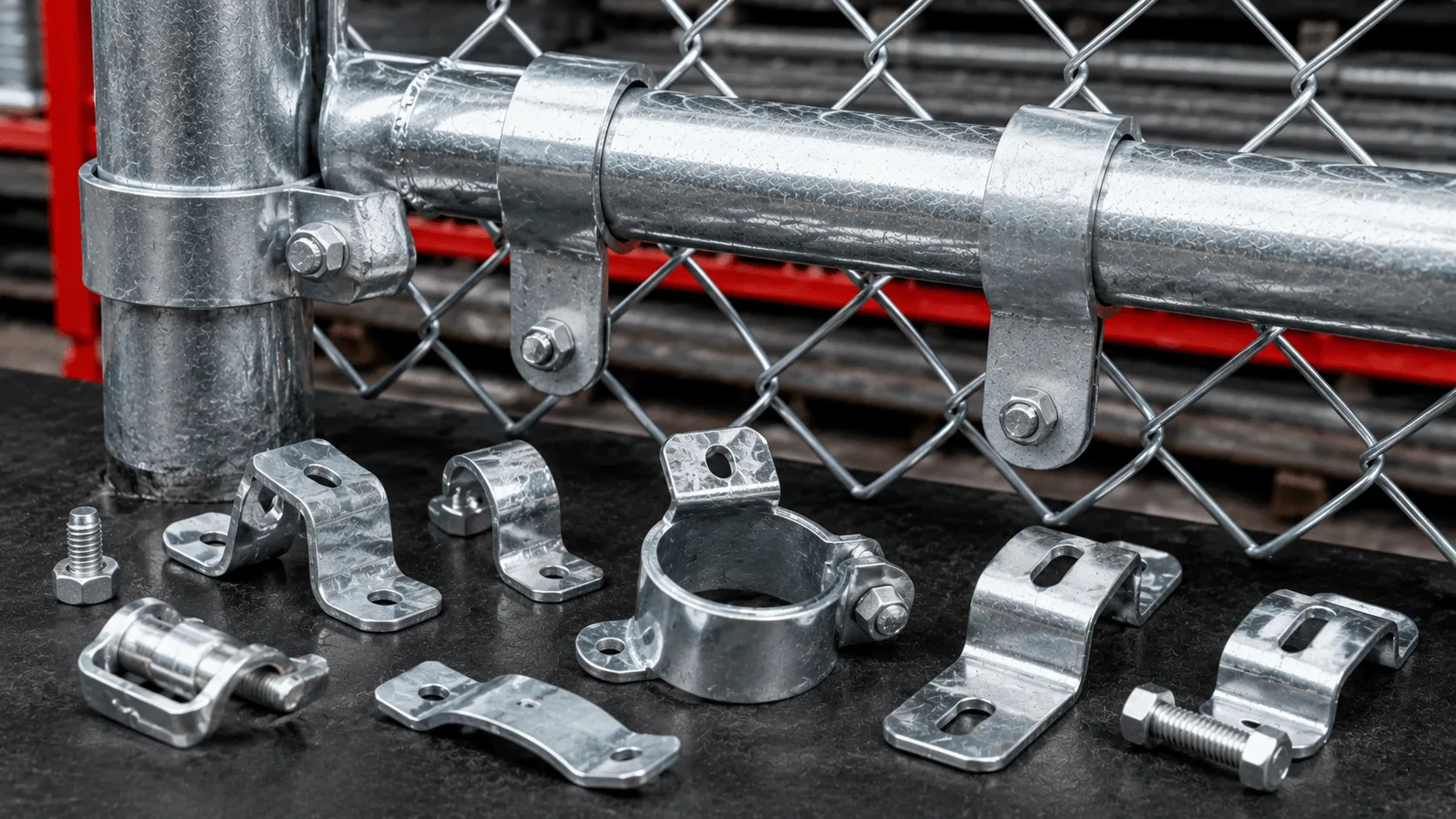
Learn what fence strap attachments are, how they work and what to consider when choosing attachments for fencing pipe and framework.
 Fittings
What Are Fence Back Plates and When Should You Use Them?
9 Sept 2026
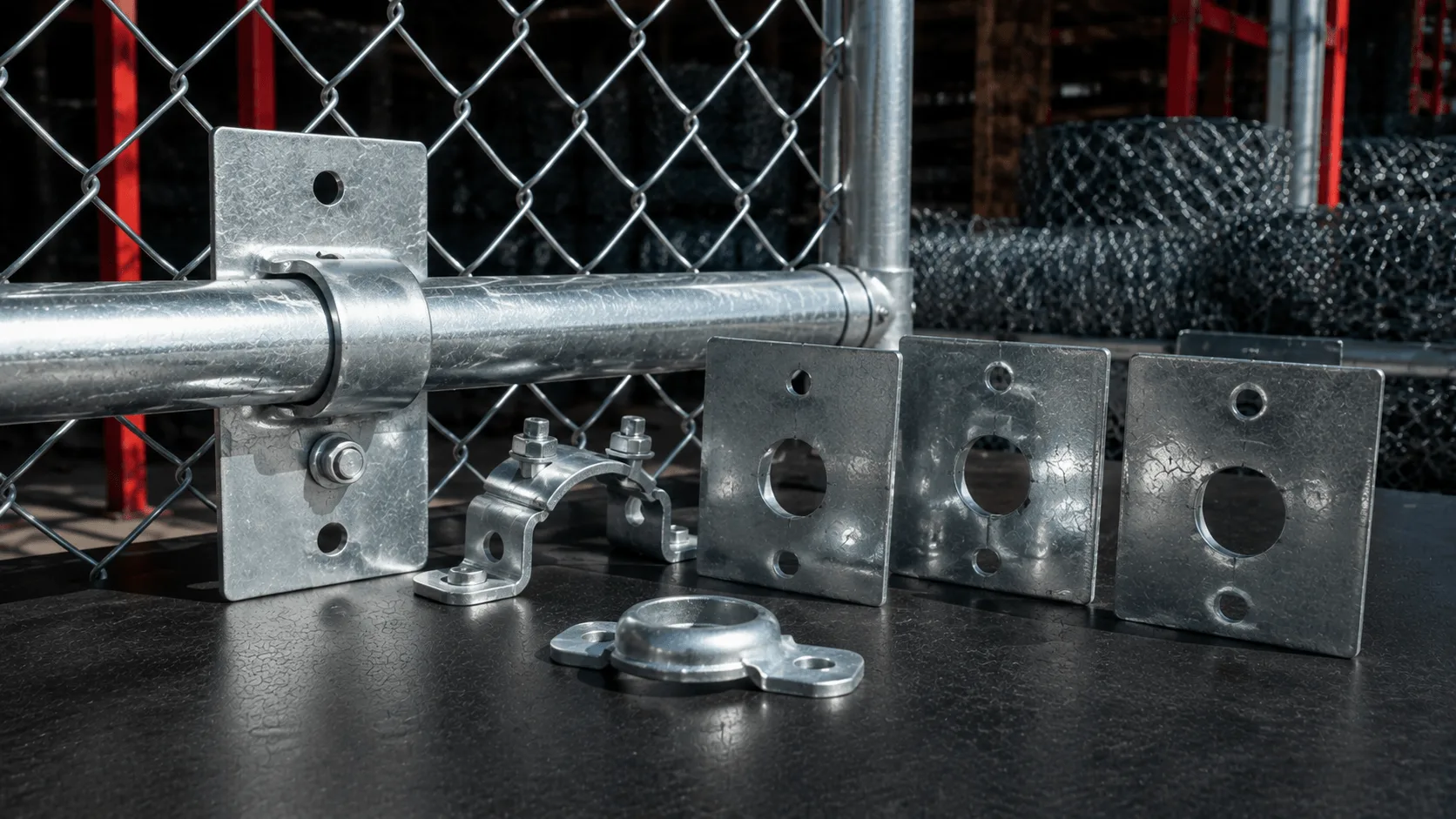
Learn what fence back plates are, when to use them and how to choose the right size and finish for fencing pipe connections.
 Product Comparison
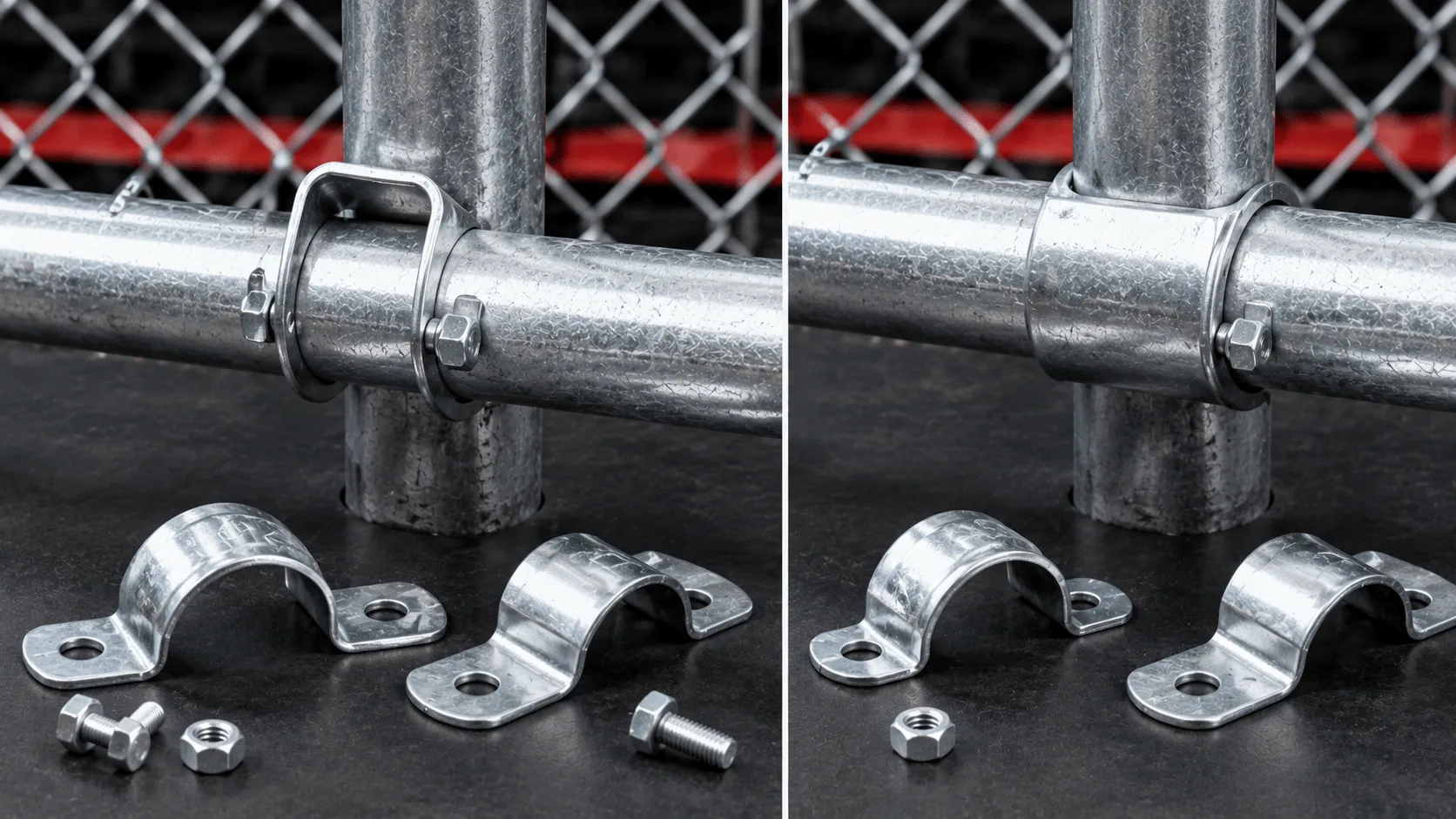
Loose Fit vs Tight Fit Pipe Straps: What's the Difference?
8 Sept 2026
Compare loose fit vs tight fit pipe straps, including sizing, finishes and key factors to check when choosing straps for fencing pipe.
Tell us about the fence.
One business day. That's how fast we come back with pricing once we have your quantity, finish and postcode.
Buying regularly? Apply for a credit account