
Best Industrial Fencing Materials for High-Security Sites
Discover the best industrial fencing materials for high-security sites, including chain link mesh, gates, barbed wire, and fittings.
Introduction
Selecting the right industrial fencing materials is one of the most important decisions for protecting high-security facilities. Industrial sites often contain valuable assets, sensitive equipment, restricted areas, and critical infrastructure that require robust perimeter protection to deter unauthorized access and support operational security.
Not all fencing materials offer the same level of performance. While some solutions prioritise appearance, industrial environments typically require fencing systems that can withstand harsh conditions, resist tampering, and provide reliable protection over the long term. The most effective high-security fencing systems combine multiple components that work together to create a strong and durable perimeter.
At Supaguard Fencing, we manufacture industrial fencing products designed for Australian commercial, industrial, infrastructure, and government applications. Understanding the strengths of different industrial fencing materials can help property owners, facility managers, and contractors choose a security solution that delivers long-term value and dependable protection.
TLDR Guide
The best industrial fencing materials for high-security sites combine strength, durability, visibility, and intrusion deterrence.
Chain link mesh remains one of the most widely used industrial fencing materials because it offers excellent security performance, visibility, and cost-effectiveness. When combined with secure gates, barbed wire, structural pipe systems, and high-quality fittings, it creates a comprehensive perimeter security solution suitable for demanding industrial environments.
Key industrial fencing materials include:
- Chain link mesh
- Security gates with 3 barb configurations
- Barbed wire
- Industrial-grade pipe systems
- Heavy-duty fittings
The most effective security fences utilise these materials together to maximise perimeter protection and long-term performance.
Detailed Breakdown
Why Material Selection Matters for Industrial Security
High-security sites face unique security challenges that require more than a basic boundary fence.
Industrial facilities often need to protect:
- Warehouses
- Manufacturing plants
- Infrastructure assets
- Utility compounds
- Distribution centres
- Restricted-access facilities
A poorly specified fencing system may create vulnerabilities that compromise site security and increase long-term maintenance costs.
Choosing the right industrial fencing materials helps create a perimeter that can:
- Deter unauthorised access
- Support surveillance systems
- Resist environmental exposure
- Maintain structural integrity
- Deliver long-term value
This is why material selection should be considered a critical part of any industrial security strategy.
Chain Link Mesh Remains an Industry Standard
One of the most trusted and widely specified Chain Link Mesh solutions continues to be a cornerstone of industrial perimeter security.
Chain link mesh offers several advantages that make it particularly suitable for high-security environments.
Strong Security Performance
The woven steel construction creates a durable physical barrier that helps discourage intrusion and unauthorised access.
Excellent Visibility
Unlike solid fencing systems, chain link mesh allows clear sightlines throughout the perimeter. This supports security monitoring, CCTV systems, and site surveillance.
Long-Term Durability
Properly manufactured chain link mesh performs exceptionally well in demanding Australian conditions and can provide decades of reliable service.
Cost-Effective Coverage
Industrial facilities often require extensive perimeter fencing. Chain link mesh provides an economical solution without sacrificing security performance.
Because of these benefits, chain link fencing remains a preferred material across numerous industrial sectors.
Security Gates Are Essential for Controlled Access
Even the strongest perimeter fence requires secure access points.
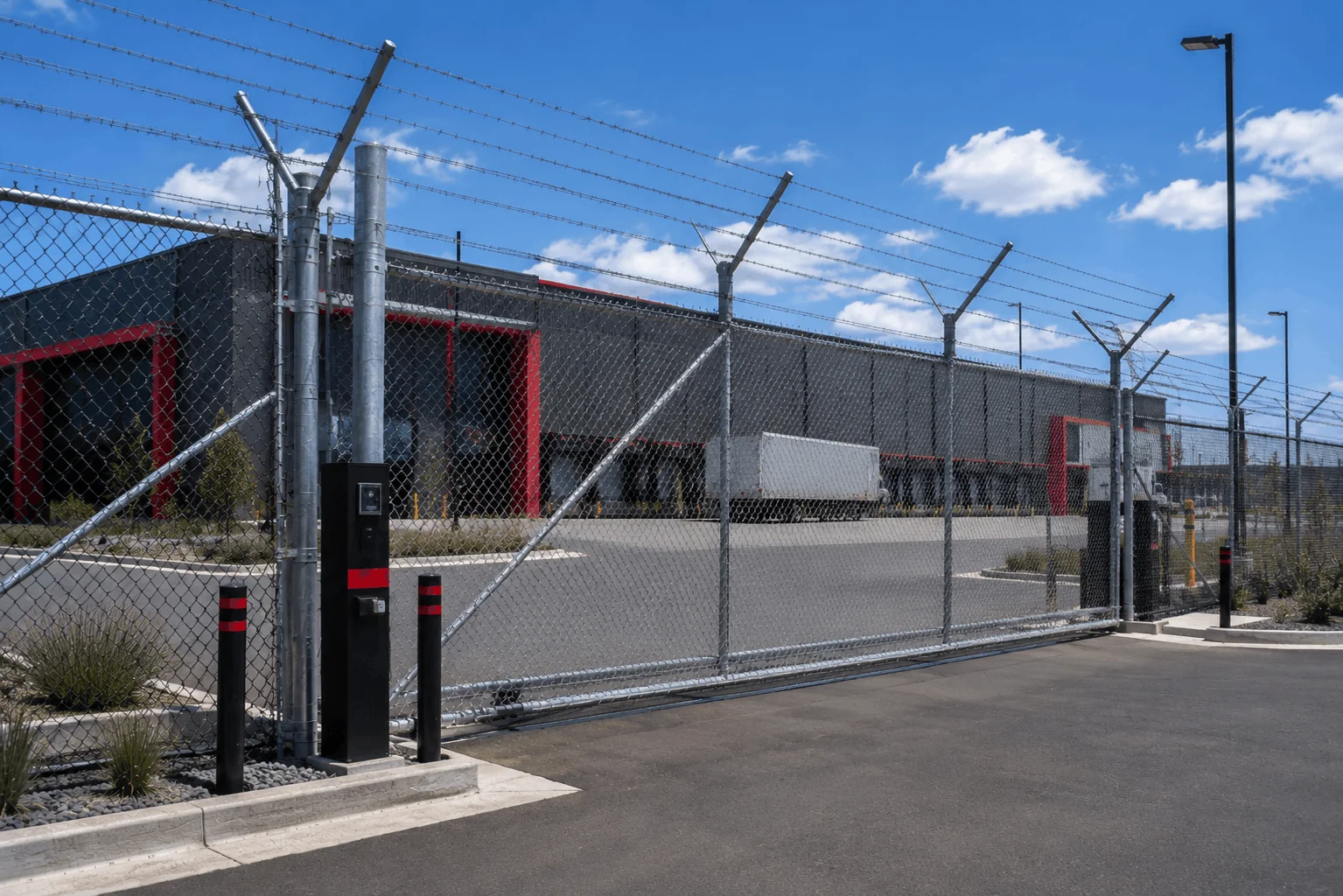
Gates + 3 Barb configurations are commonly used for industrial facilities that require enhanced perimeter security while maintaining operational access.
Security gates serve several important functions:
- Controlling vehicle entry
- Managing staff access
- Supporting site security procedures
- Maintaining perimeter continuity
The addition of a 3 barb configuration further strengthens perimeter protection by increasing climb resistance and enhancing deterrence.
For high-security sites, gates should be viewed as an integral part of the overall fencing system rather than a standalone component.
Barbed Wire Provides an Additional Security Layer
For facilities that require elevated levels of perimeter protection, Barbed Wire remains one of the most effective security enhancements available.
Barbed wire is commonly installed along the top of industrial fencing systems to increase deterrence and reduce climbing opportunities.
Benefits include:
- Increased perimeter security
- Enhanced intrusion resistance
- Improved deterrence
- Additional protection for sensitive sites
- Greater climb prevention
Industrial facilities that manage valuable assets or restricted operations often incorporate barbed wire as part of a layered security strategy.
Pipe Systems Provide Structural Strength
A security fence is only as strong as its supporting framework.
Industrial-grade pipe systems play a crucial role in maintaining fence stability, alignment, and durability.
Pipe components contribute to:
- Structural integrity
- Wind resistance
- Long-term reliability
- Fence stability
- Load-bearing performance
Large industrial sites frequently require extensive fencing runs that must withstand environmental stresses over many years.
Strong pipe systems help ensure the fencing structure remains secure and effective throughout its service life.
High-Quality Fittings Support Long-Term Performance
While often overlooked, Fittings are among the most important industrial fencing materials.
Fittings connect the various components of the fencing system and help maintain structural integrity under demanding conditions.
Quality fittings provide:
- Strong component connections
- Improved fence stability
- Enhanced durability
- Reduced maintenance requirements
- Better long-term performance
Using premium fittings helps prevent common issues that can compromise perimeter security over time.
Why Layered Security Delivers Better Results
Modern industrial security relies on multiple layers of protection rather than a single barrier.
An effective perimeter system typically combines:
- Chain link mesh
- Security gates
- Barbed wire
- Structural pipe systems
- Quality fittings
- Each component contributes to the overall effectiveness of the perimeter.
When integrated properly, these materials create a security solution that is significantly stronger than any individual component operating alone.
Factors to Consider When Selecting Industrial Fencing Materials
Every industrial site has unique security requirements.
Before selecting fencing materials, consider:
- Site Risk Level
Higher-risk facilities may require additional deterrence measures such as barbed wire and reinforced access points.
Environmental Conditions
Coastal environments, industrial emissions, and extreme weather conditions can influence material selection.
Access Requirements
The number and type of access points should align with operational needs and security objectives.
Maintenance Expectations
Durable materials can help minimise long-term maintenance and operational disruptions.
Budget and Lifecycle Costs
The most cost-effective solution is often the one that provides the best long-term value rather than the lowest initial investment.
Why Chain Link-Based Systems Continue to Dominate Industrial Security
Despite advancements in fencing technology, chain link-based systems continue to dominate industrial perimeter security.
Their popularity stems from their ability to deliver:
- Proven security performance
- Excellent visibility
- Scalability
- Durability
- Cost-effectiveness
- Flexibility
When combined with gates, barbed wire, pipe systems, and fittings, chain link fencing creates a comprehensive security solution capable of meeting the demands of modern industrial facilities.
Key Takeaways
Choosing the right industrial fencing materials is essential for creating a secure, durable, and reliable perimeter around high-security sites. The most effective industrial fencing systems combine multiple components that work together to provide comprehensive protection.
Chain link mesh remains one of the most trusted industrial fencing materials because it offers excellent visibility, strength, and long-term performance. When paired with security gates, barbed wire, structural pipe systems, and quality fittings, it forms a highly effective perimeter security solution.
Key points to remember include:
- Chain link mesh remains a leading industrial fencing material.
- Security gates help maintain controlled access.
- Barbed wire enhances deterrence and climb resistance.
- Pipe systems provide structural support and durability.
- Quality fittings contribute to long-term fence performance.
- Layered security strategies deliver stronger protection than standalone solutions.
By selecting proven materials and integrating them into a complete perimeter security system, industrial facilities can achieve reliable protection and long-term operational confidence.
FAQs
What are the best industrial fencing materials for high-security sites?
The best industrial fencing materials typically include chain link mesh, security gates, barbed wire, structural pipe systems, and heavy-duty fittings. Together, these components create a strong and reliable perimeter security solution. The ideal combination depends on the specific security requirements of the site.
Why is chain link mesh commonly used in industrial fencing?
Chain link mesh provides a balance of security, visibility, durability, and cost-effectiveness. It allows clear sightlines for surveillance while creating a strong physical barrier. These qualities make it one of the most widely used industrial fencing materials.
Is barbed wire necessary for industrial security fencing?
Barbed wire is not always required, but it can significantly improve perimeter security for higher-risk facilities. It acts as a strong visual deterrent and makes climbing more difficult. Many industrial sites incorporate barbed wire as part of a layered security strategy.
How important are fittings in industrial fencing systems?
Fittings are critical because they connect and support the various components of the fencing system. High-quality fittings improve structural integrity and long-term performance. Poor-quality fittings can compromise the effectiveness of the entire fence.
What should be considered when selecting industrial fencing materials?
Important considerations include security requirements, environmental conditions, access needs, maintenance expectations, and long-term costs. Material selection should align with both operational requirements and risk management objectives. A well-designed fencing system balances security, durability, and value.
More from the blog.
 Fittings
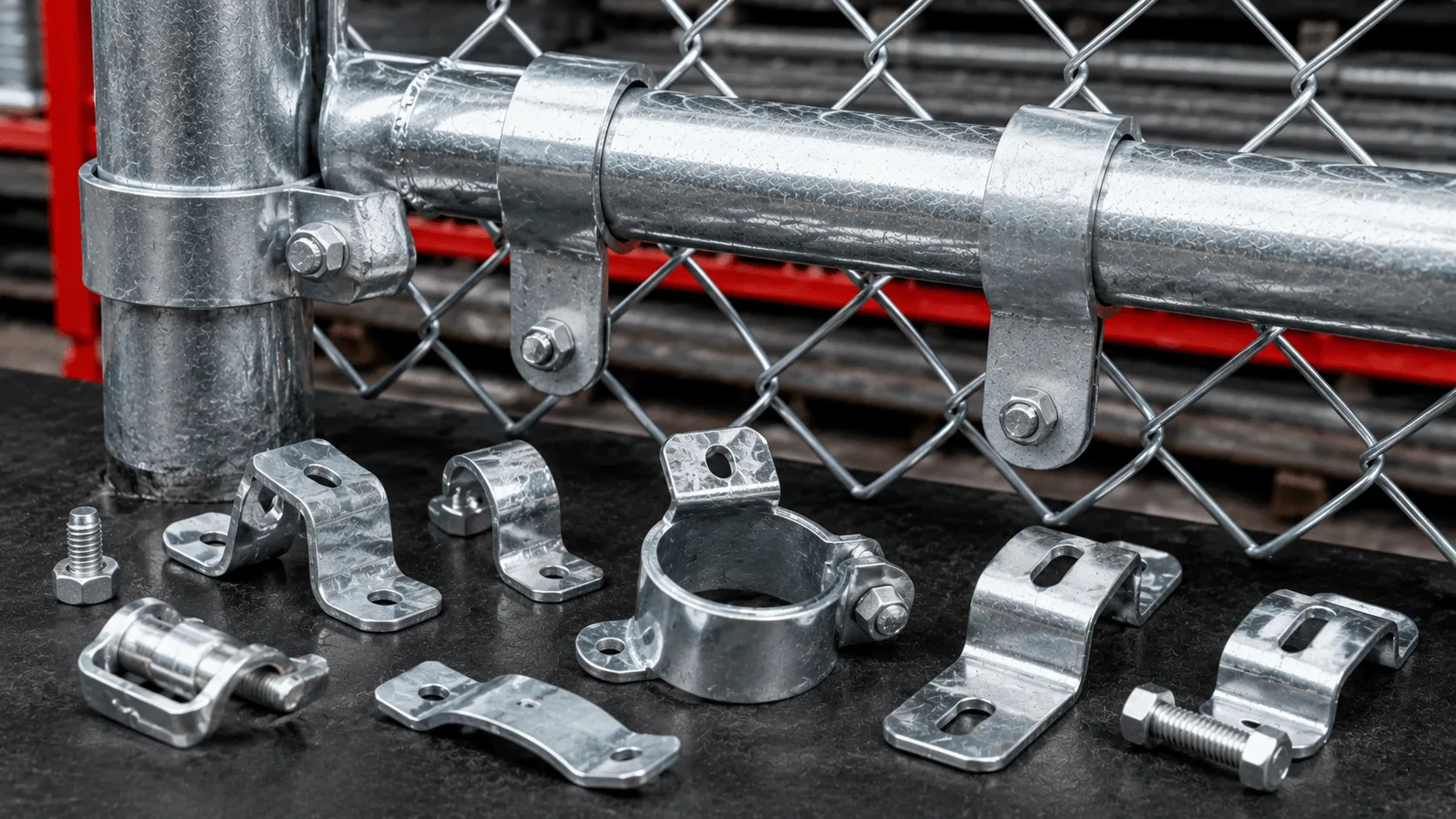
What Are Fence Strap Attachments and How Do They Work?
10 Sept 2026
Learn what fence strap attachments are, how they work and what to consider when choosing attachments for fencing pipe and framework.
 Fittings
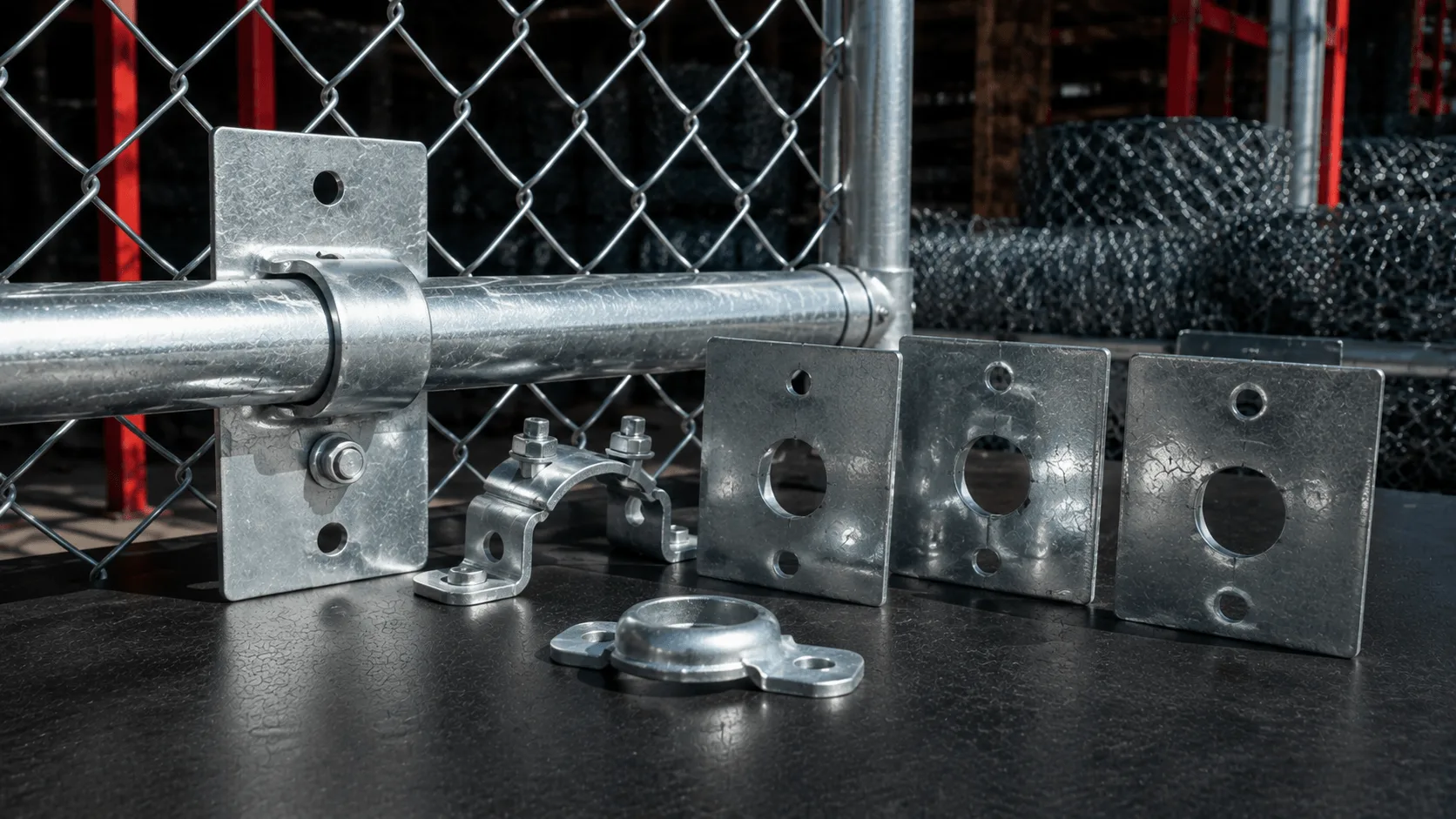
What Are Fence Back Plates and When Should You Use Them?
9 Sept 2026
Learn what fence back plates are, when to use them and how to choose the right size and finish for fencing pipe connections.
 Product Comparison
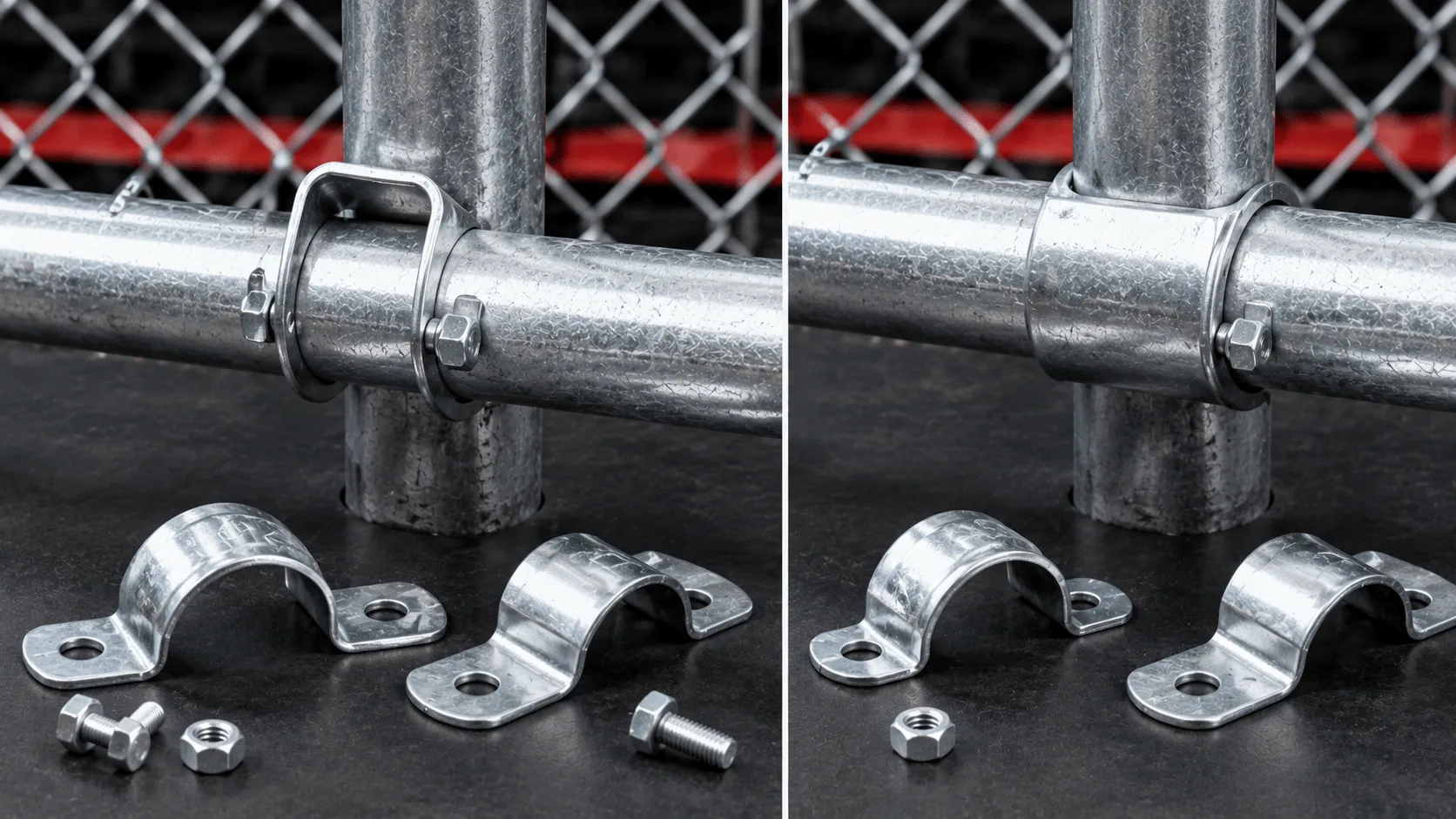
Loose Fit vs Tight Fit Pipe Straps: What's the Difference?
8 Sept 2026
Compare loose fit vs tight fit pipe straps, including sizing, finishes and key factors to check when choosing straps for fencing pipe.
Tell us about the fence.
One business day. That's how fast we come back with pricing once we have your quantity, finish and postcode.
Buying regularly? Apply for a credit account