
Ring Fasteners vs Netting Clips: Which Should You Choose?
Compare ring fasteners vs netting clips for chain link fencing, including tools, pack sizes, applications and key selection considerations.
Introduction
Small components can make surprisingly big decisions in a chain link fencing project. Ring fasteners and netting clips are both fastening options, but that doesn't mean they're automatically interchangeable.
When comparing ring fasteners vs netting clips, the right choice comes down to the fencing system, required fastening method, compatible installation tool and project specification. Choosing on appearance alone is a shortcut that's unlikely to save much time once you're on site.
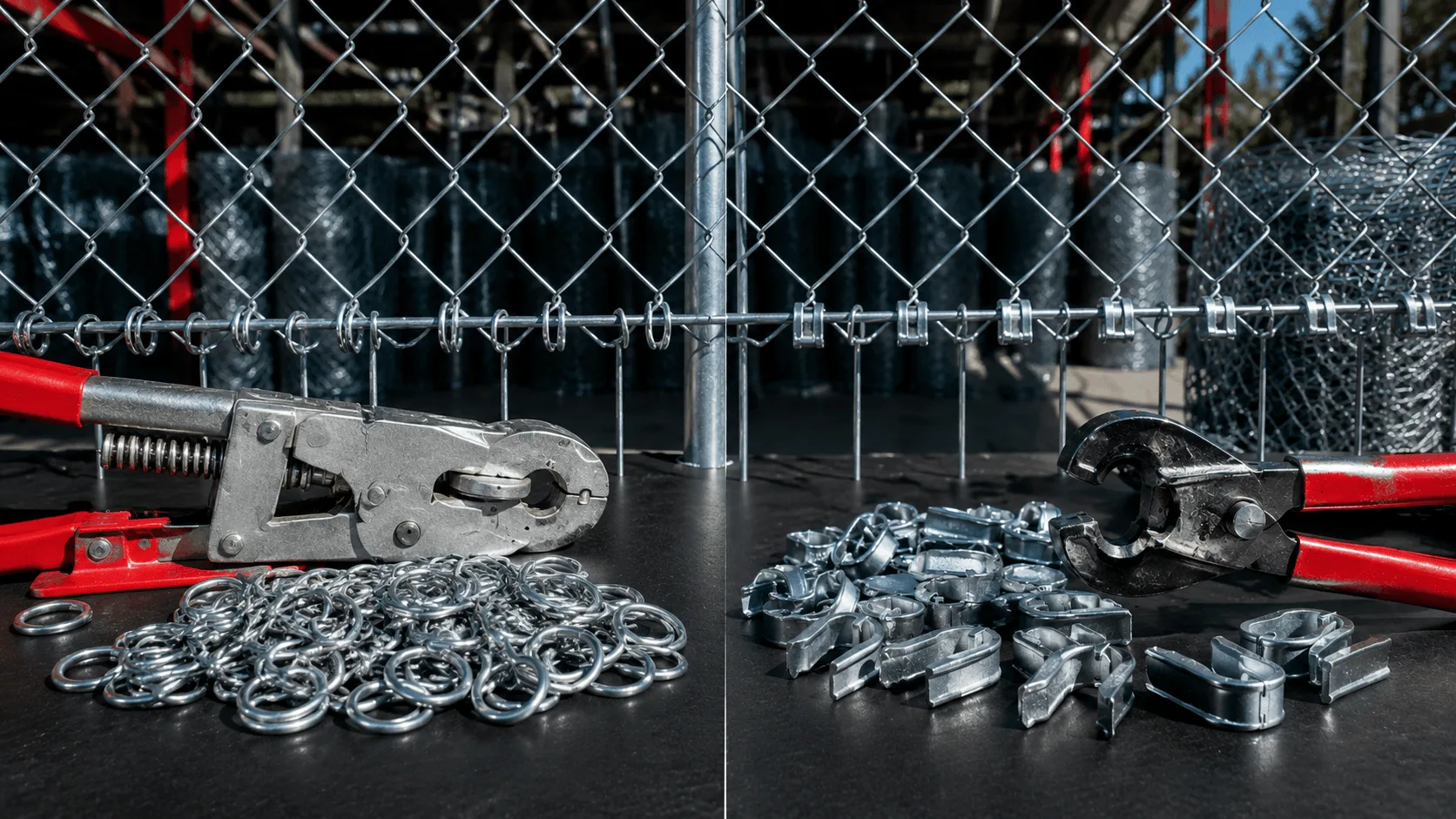
Australian manufacturer Supaguard Fencing lists both options within its fencing accessories range. Its current range includes high-tensile ring fasteners supplied in 1,000-piece packs with a corresponding ring fastener gun, while its galvanised 19 x 2.24 mm netting clips come in 500-piece packs with 19 mm netting clip pliers.
So, ring fasteners vs netting clips: which should you choose? Let's break down what actually matters.
TLDR - Quick Guide
Here's the quick comparison:
Ring fasteners: Supaguard lists high-tensile ring fasteners in 1,000-piece packs alongside an Airco high-tensile ring fastener gun.
Netting clips: Supaguard lists galvanised netting clips measuring 19 x 2.24 mm in packs of 500.
Tools differ: Ring fasteners and netting clips have different corresponding application tools.
Specifications matter: Don't assume one fastening method can replace another without checking the fencing requirements.
Project scale matters: Pack quantity and application method can influence material planning for larger installations.
The best choice: Use the fastening system specified or recommended for your particular chain link fencing setup.
There isn't a universal winner in the ring fasteners vs netting clips debate. The better fastener is the one suited to the job.
Detailed Breakdown
What Are Ring Fasteners?
Ring fasteners are metal fastening components applied using a compatible ring fastening tool.
Supaguard's Fencing Accessories range lists R-HT high-tensile ring fasteners in packs of 1,000. It also lists the RP-HT Ring Fastener Gun Airco – High Tensile as the corresponding fastening tool.
The basic fastening principle involves positioning the fastener around the materials being joined and using the appropriate tool to close it.
The important takeaway is that the fastener and application tool form a system. Selecting ring fasteners without considering how they'll be installed is only half a purchasing decision.
What Are Netting Clips?
Netting clips are another fastening option found within chain link fencing accessory ranges.
Supaguard specifies its C-CLIPS netting clips as galvanised, 19 x 2.24 mm and supplied in packs of 500. The company also lists C-CP green-handle netting clip pliers for 19 mm clips.
Again, there's a clear relationship between fastener and tool.
When evaluating ring fasteners vs netting clips, therefore, you're not simply comparing two little pieces of metal. You're comparing two fastening setups.
Ring Fasteners vs Netting Clips: The Main Differences
1. Fastener Specification
The most obvious difference is the specification of the products themselves.
Supaguard describes its ring fasteners as high tensile, while its netting clips are listed as galvanised 19 x 2.24 mm clips.
Those aren't meaningless catalogue details. They tell you immediately that you shouldn't grab either product from the shelf and assume it will perform the same job in exactly the same way.
Before choosing, check:
- Fastener dimensions
- Material or product specification
- Finish
- Intended fencing application
- Compatible tool
- Project requirements
Specifications first. Guesswork last.
2. Application Tools
One of the clearest differences when comparing ring fasteners vs netting clips is the tool associated with each option.
Supaguard pairs its high-tensile ring fasteners with an Airco high-tensile ring fastener gun. Its netting clips, meanwhile, are accompanied by green-handle netting clip pliers designed for 19 mm clips.
That means your choice may also affect the installation equipment required.
Before ordering fasteners, ask:
- Which fastening method does the fence require?
- Do we already have the appropriate tool?
- Is that tool compatible with the selected fastener?
How many fastening points are involved?
Does the project documentation specify a particular method?
Don't order 10 boxes of fasteners and save the tool question for Friday afternoon.
3. Pack Quantities
Quantity is another practical difference.
Supaguard currently lists:
- Ring fasteners: 1,000 per pack
- Netting clips: 500 per pack
Pack size alone doesn't make one product better value or more suitable. You need to calculate how many fastening points the project requires and then compare that requirement with the pack quantity.
For material planning, consider:
- Fence length
- Fence height
- Fastening arrangement
- Number of sections
- Gates and openings
- Corners and changes in direction
- Installation allowance
Buying the correct fastener in the correct quantity beats having piles of the wrong one left over.
4. Compatibility With the Fence
This is where the ring fasteners vs netting clips comparison becomes project-specific.
A Chain Link Fencing installation can include mesh, supporting wire, posts, pipe, gates and various fittings. The fastening method needs to work with the components and installation specification you're actually using.
Don't begin with, "Which fastener do I like better?"
Begin with, "What does this fence require?"
Review the mesh and Fencing Wire specifications alongside the fastening requirements. If project documentation specifies a particular fastening method, follow that requirement rather than treating ring fasteners and netting clips as interchangeable.
5. Installation Method
Both products are fastening components, but their associated tools indicate different installation setups.
Netting clips in Supaguard's range are paired with manually operated green-handle pliers, while its high-tensile ring fasteners are paired with an Airco ring fastener gun.
That difference deserves consideration when planning a project.
Think about:
- The fastening tool required
- Number of connections to be made
- Accessibility along the fence
- Installer familiarity with the equipment
- Project specifications
- Equipment available on site
The goal isn't to crown one method universally "faster." Without project-specific installation data, that claim would be too broad. The sensible approach is to choose the system that matches the application and installation requirements.
6. Material and Finish
Outdoor fencing components have to live outdoors, which makes material and finish relevant.
Supaguard explicitly describes its netting clips as galvanised and its ring fasteners as high tensile. Those descriptions refer to different characteristics, so they shouldn't be interpreted as a direct durability comparison without further technical specifications.
When selecting a fastener, review:
- Required corrosion protection
- Fence finish
- Site exposure
- Project specification
- Compatibility with surrounding components
If corrosion resistance or a particular coating is mandatory, verify the required specification before purchasing.
7. Project Size and Workflow
For a small fence, the difference between fastening systems may seem minor. Scale the project up to hundreds or thousands of connections and workflow becomes much more noticeable.
This doesn't automatically mean ring fasteners are right for large projects or netting clips are right for small ones. It means installation volume should be part of the decision.
Consider how many fasteners need to be applied, what equipment the crew will use and how the fastening process fits into the overall installation.
For substantial projects, planning those details before materials arrive can eliminate unnecessary delays.
So, Which Should You Choose?
The answer to ring fasteners vs netting clips isn't "always choose ring fasteners" or "always choose netting clips."
Choose based on the actual fence.
Consider Ring Fasteners When:
- The fencing specification calls for ring fastening.
- High-tensile ring fasteners are appropriate for the intended application.
- You have access to the compatible ring fastening equipment.
- The fastening system matches the other fencing components.
- Consider Netting Clips When:
- Netting clips are specified for the required connection.
- A 19 mm clip system is appropriate for your application.
- The galvanised clip specification suits the project.
- Compatible netting clip pliers are available.
If neither list gives you a confident answer, that's a sign to check the specification rather than flip a coin.
Common Mistakes When Choosing Between Them
Assuming They're Interchangeable
Ring fasteners and netting clips are listed as separate products with separate tools. Treat substitution as a technical decision, not a convenience decision.
Choosing Based Only on Pack Size
A 1,000-piece pack isn't automatically a better purchase than a 500-piece pack. Suitability comes first; quantity comes second.
Forgetting About the Tool
Fastener choice and tool choice go together. Confirm that the required installation equipment is available and compatible before ordering.
Ignoring the Rest of the Fence
Fasteners don't work in isolation. Mesh, wire, framework and accessories should be treated as parts of the same fencing system.
Making Unsupported Durability Assumptions
"High tensile" and "galvanised" describe different product characteristics. Don't use those labels alone to conclude that one fastener is universally stronger, longer-lasting or more corrosion-resistant than the other.
Key Takeaways
There isn't one universal winner. The right answer to ring fasteners vs netting clips depends on the chain link fencing system and project specification.
The products have different specifications. Supaguard lists high-tensile ring fasteners and galvanised 19 x 2.24 mm netting clips.
They use different tools. Supaguard pairs ring fasteners with an Airco ring fastener gun and its 19 mm netting clips with green-handle netting clip pliers.
Pack quantities differ. The listed ring fasteners come in packs of 1,000, compared with 500 pieces per pack for the netting clips.
Compatibility beats convenience. Check the mesh, wire, fastener, tool and overall fence specification before deciding.
Don't substitute blindly. Similar purposes don't necessarily make two fencing accessories interchangeable.
Ask when the specification isn't clear. You can Contact Supaguard Fencing to discuss product requirements for a chain link fencing project.
FAQs
Are ring fasteners better than netting clips for chain link fencing?
Neither option is automatically better for every chain link fence. The correct choice depends on the required fastening method, fencing components, tools and project specification. Compare those requirements before deciding between ring fasteners vs netting clips.
What is the main difference between ring fasteners and netting clips?
Supaguard lists its ring fasteners as high tensile and supplied in 1,000-piece packs, while its netting clips are galvanised 19 x 2.24 mm products supplied in packs of 500. The two products also have different corresponding application tools. These differences mean they should be selected according to the intended fencing application rather than treated as identical fasteners.
Do ring fasteners and netting clips use the same tool?
No, the Supaguard range lists different tools for the two fastening systems. Its high-tensile ring fasteners are accompanied by an Airco ring fastener gun, while the 19 mm netting clips have green-handle netting clip pliers. Always check tool compatibility with the exact fastener being purchased.
Can I replace netting clips with ring fasteners?
You shouldn't assume ring fasteners can directly replace netting clips simply because both are fencing accessories. Check what the connection requires and whether the alternative fastener complies with the fencing or project specification. If the required fastening method is unclear, confirm it with the supplier or relevant project documentation.
How do I decide which chain link fencing fastener to buy?
Start with the chain link fence specification and identify the fastening method required at each connection. Then check fastener specifications, compatible tools, quantities and the surrounding mesh and wire components. This system-first approach makes the ring fasteners vs netting clips decision much easier.
More from the blog.
 Fittings
What Are Fence Strap Attachments and How Do They Work?
10 Sept 2026
Learn what fence strap attachments are, how they work and what to consider when choosing attachments for fencing pipe and framework.
 Fittings
What Are Fence Back Plates and When Should You Use Them?
9 Sept 2026
Learn what fence back plates are, when to use them and how to choose the right size and finish for fencing pipe connections.
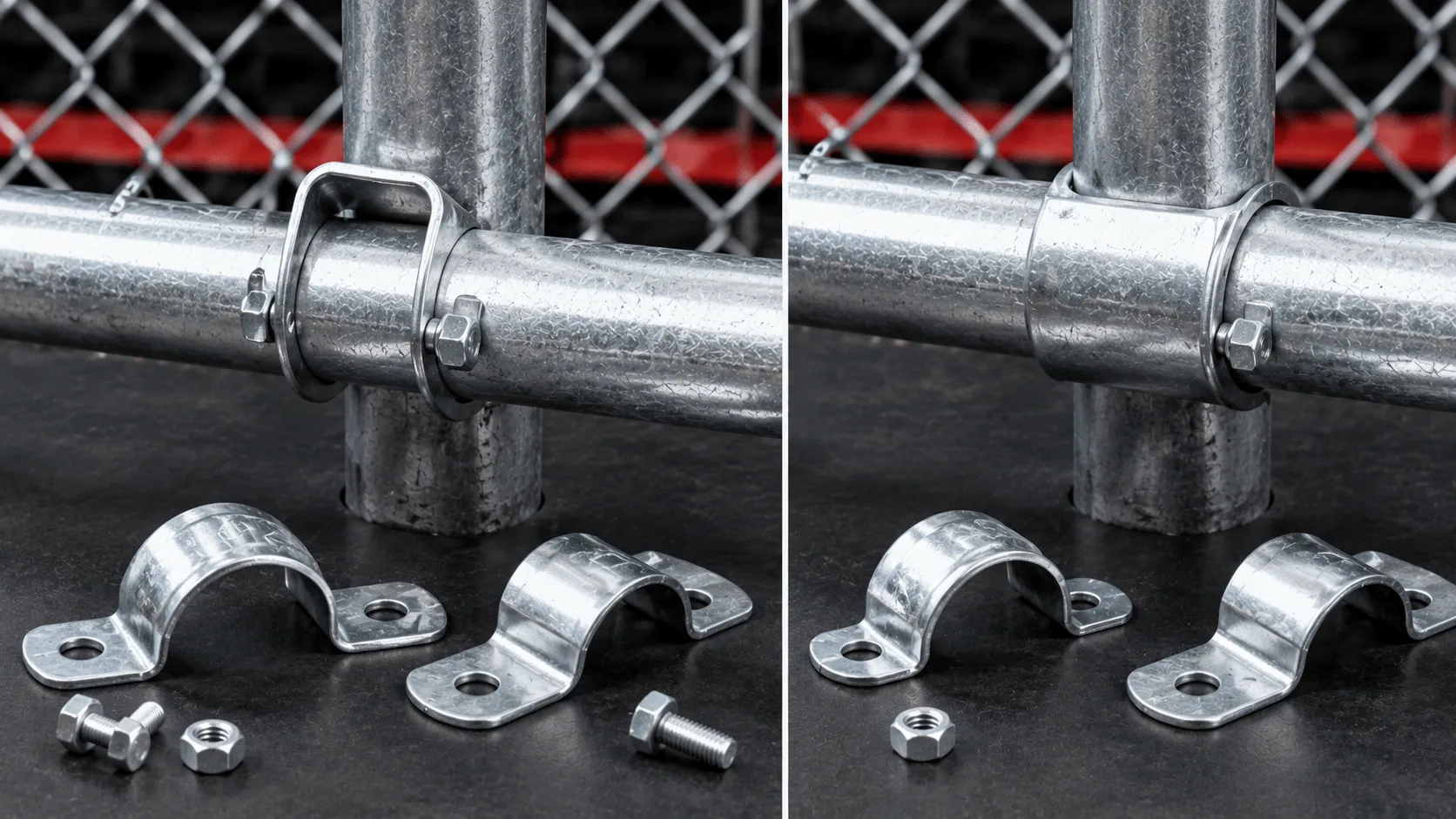 Product Comparison
Loose Fit vs Tight Fit Pipe Straps: What's the Difference?
8 Sept 2026
Compare loose fit vs tight fit pipe straps, including sizing, finishes and key factors to check when choosing straps for fencing pipe.
Tell us about the fence.
One business day. That's how fast we come back with pricing once we have your quantity, finish and postcode.
Buying regularly? Apply for a credit account